Articles Menu
Dec. 4, 2025
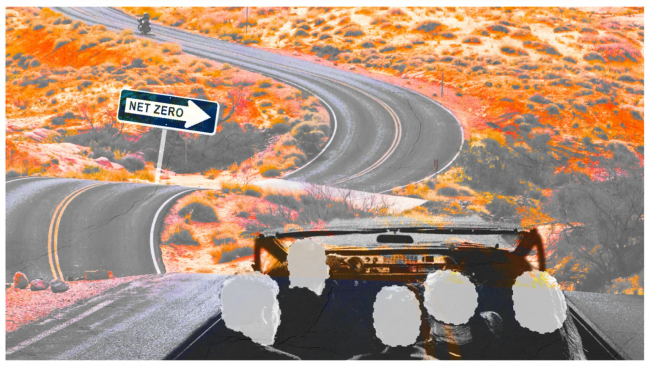
The federal government’s expert body mandated to provide it with independent advice to reach net-zero emissions is collapsing following Prime Minister Mark Carney’s pipeline agreement with Alberta. Two prominent members of the body, including its chair, have resigned this week, citing a lack of influence over a government that’s increasingly pulling back on climate action.
Simon Donner, a professor at the University of British Columbia and the Net-Zero Advisory Body chair, resigned from his post Wednesday. In a statement on LinkedIn, he said the group tried its best under the circumstances, but the direction of the federal government under Carney’s leadership became too much to bear.
“I was comfortable chairing an appointed body whose advice is considered but ultimately rejected — after all, no one elected us,” he wrote. “I was not comfortable with the process becoming neglected or performative, and it had begun to feel that way to me.”
Donner previously criticized Carney’s claim Canada could export “decarbonized oil” — a euphemism for pairing new oil extraction with carbon capture that is the essence of the federal pipeline memorandum of understanding with Alberta — as an Orwellian phrase.
Separately, Catherine Abreu, director of the International Climate Politics Hub and member of Canada’s Net-Zero Advisory Body who was named one of the 100 most influential people in climate policy by Apolitical, resigned Thursday — more than two years before her mandate expires.
In an interview with Canada’s National Observer, Abreu said the country finds itself in a situation where the Net-Zero Accountability Act legally requires independent climate experts and Indigenous Peoples be consulted on federal climate plans and that has not happened.
“At no point have we been consulted, and I am reading stories every day about Indigenous communities who have not been consulted on any of the decisions that have been made regarding Canadian climate policy,” she said. “I just can't conscientiously continue in a role that is empowered by this piece of legislation that isn't being respected.”
Ignored since the federal election, an arms-length expert body set up to advise the federal government on the energy transition is collapsing, with the latest pipeline agreement between Canada and Alberta representing the final straw. - BlueSky
Donner and Abreu’s resignations come a week after former environment minister Steven Guilbeault quit Carney’s cabinet over the pipeline memorandum of understanding. The MOU has been widely condemned by climate experts and civil society groups.
Carney’s government has ditched energy efficiency retrofit programs and the proposed oil and gas cap, paused electric vehicle sales mandates, announced plans to gut anti-greenwashing rules and gave the government power to override environmental regulations and Indigenous consent to build major projects.
And while climate policies are clawed back under the name of economic competitiveness, Carney has also announced support for LNG Canada Phase 2, the Ksi Lisims LNG terminal and the Prince Rupert Gas Transmission pipeline, as well as signed an agreement with Alberta that could see a new bitumen pipeline built while exempting the province from other policies including the clean electricity regulations.
“It means we're not going to deliver on our 2030 target, we're not going to deliver on our 2035 target, and without delivering on those milestones there's no getting to net zero by 2050,” Abreu said.
The Net-Zero Advisory Body was launched in 2021 and is legally mandated to provide independent advice to the Environment and Climate Change minister on how the country can reach net-zero emissions by 2050.
The resignations of Donner and Abreu mark a precipitous drop in the expert group’s membership count. A year ago it had 13 members, according to orders-in-council reviewed by Canada’s National Observer. It is now down to four.
The group dropped from eight to six in September when other members’ mandates expired and were not renewed. Environment and Climate Change Canada did not confirm if there were any plans to replace the outgoing members. However, the department did say “any appointments would be announced publicly in a timely manner.”
Another previous member of the NZAB, speaking on background, said a list of approved experts exists and could be appointed, but the federal government is choosing not to do so.
In that light, the arms-length group of experts appears to be slowly being bled dry. The group was not consulted even as Carney and Environment and Climate Change Minister Julie Dabrusin prepared the climate competitiveness strategy. That strategy, bundled into November's budget, did not include any emissions modelling.
In fact, Dabrusin has not called on the NZAB even once to provide input, said Abreu.
“The Government values the independent advice of the Net-Zero Advisory Body and continues to engage broadly with experts and partners to inform its climate and economic priorities,” said Keean Nembhard, Dabrusin’s press secretary. “The important work of the NZAB is ongoing, and the Body is set to meet with the Minister before the end of the year.”
A date for the meeting has not been set.
[Top: Art by Ata Ojani/Canada's National Observer]