Articles Menu
Mar. 15, 2026
B.C. has quietly eliminated its Climate Action Secretariat, the long-running agency that produced and implemented climate policy across government ministries.
In an email to staff viewed by The Tyee, Peter Pokorny, deputy minister of energy and climate solutions, said that “to align with key priorities” some secretariat staff would move to new subject matter, including supporting LNG, pipelines and gas fracking.
The Tyee has learned this includes at least 10 of the secretariat’s former staff members.
Other staff will be moved to a newly formed “climate solutions” division within the Ministry of Energy and Climate Solutions, which will also bring in staff from the now-folded “energy decarbonization division.” The new division will focus on some of the secretariat’s previous responsibilities, including emissions accounting and efforts to reduce emissions in sectors like buildings, transportation and industry.
Sven Biggs, campaign director for Stand.earth, described the move as part of the “slow-motion death” of the province’s climate plan, CleanBC, which the secretariat was tasked to steward.
“We don’t have a plan to meet our 2030 target, and we’re not trying to develop one,” he said.
First launched by Gordon Campbell’s BC Liberal government in 2007, the Climate Action Secretariat was designed to sit above the ministry-level fray to ensure that climate policy was integrated across all departments.
After a decade-long lull, its powers were resurrected in 2018 to implement the NDP’s CleanBC climate plan, which promised to reduce emissions by 40 per cent by 2030.
Now, with just four years to go until that deadline, B.C.’s emissions are spiking, driven in large part by fracking operation expansions. Last year, the province acknowledged it won’t meet its 2030 goal.
It’s unclear whether or to what extent the Climate Action Secretariat’s focus areas, including working with First Nations and local governments on climate policy, designing climate plans and drafting new climate regulations, will continue.
In an emailed statement to The Tyee, the Ministry of Energy and Climate Solutions pushed back on the idea that it had eliminated the secretariat, instead referring to the cuts as a “reconfiguration.”
“We have combined it with the Energy Decarbonization Division to form a new Climate Solutions Division, bringing together climate policy, program delivery and energy decarbonization expertise in a more integrated way,” the statement said, adding that CleanBC, and the province’s existing climate legislation and regulations, “remain firmly in place.”
It added that the change “supports the ministry’s work to advance climate action while growing the economy, and reflects the need to make disciplined, effective choices within the public service.”
The ministry did not respond to questions sent by The Tyee about deputy minister Pokorny’s email by press time.
The province isn’t the only one to have axed a climate policy arm this month.
This month Vancouver closed its sustainability department, which ran its core climate policies, including an expansive zero-emission building program.
According to Vancouver Coun. Pete Fry, the city has described the move as part of a “targeted departmental reorganization,” noting that staff have been moved to other positions within the city to continue their work.
In an email to The Tyee, the city described the move as part of a “targeted departmental reorganization,” noting that staff have been moved to other positions within other city departments “so planning and policy decisions are more directly embedded.”
Fry described the city’s position as “a bit of a spin.”
“They have effectively eliminated the sustainability department without saying as much,” he said.
Vancouver, like B.C., is on track to fail its commitment to reduce emissions, including its goal to reduce them by 50 per cent by 2030.
Biggs described the cuts to the City of Vancouver as “kind of devastating” given the progress made on green buildings, but he added that B.C.’s decision to cut the Climate Action Secretariat could have even farther-reaching implications.
“It is shocking how quickly things have changed on the provincial level,” he said.
BC’s climate roller-coaster
The Climate Action Secretariat formed a core part of B.C.’s early climate policy efforts.
Inspired by talks with then-California governor Arnold Schwarzenegger, former premier Campbell’s 2007 throne speech warned that climate change was “literally threatening life on Earth as we know it.” The speech introduced B.C.’s first climate targets and launched the Climate Action Secretariat to achieve them.
In the legislature, Campbell described his decision to locate the secretariat within the Office of the Premier as strategic, noting that “it’s important, as we deal with this issue, that it be comprehensive, that it be cross-government.”
The secretariat designed and ran a growing list of programs under Campbell’s 2008 “green budget,” which launched the province’s first consumer carbon tax, industrial emission programs and a slate of rebates and incentives it would go on to manage. It also handled the government’s program requiring public sector organizations* to become “carbon neutral” by reducing and otherwise offsetting their emissions.
Christy Clark, Campbell’s successor, quickly froze or eliminated many of the programs, directing some secretariat staff to work on emissions policies for LNG. She also removed the secretariat from its elevated position within the Office of the Premier, moving it under the Ministry of Environment.
When the NDP won the election in 2017, then-premier John Horgan vowed to put climate policy back on the agenda, launching a new climate plan called CleanBC, which made major policy commitments on zero-emission buildings, electric vehicles, landfill emissions, efforts to reduce industrial emissions such as methane and efforts to electrify fracking operations.
The secretariat’s staff numbers grew, and its policy mandate expanded to cover CleanBC’s growing list of initiatives. The secretariat also received an injection of some of the funds from B.C.’s carbon tax for climate-related incentives such as home retrofits.
In 2024, Premier David Eby moved the secretariat from the Ministry of Environment into the newly formed Ministry of Energy and Climate Solutions, placing the ministry responsible for climate action alongside the ministry tasked with expanding electricity, but also oil, gas and LNG.
“That was a significant reorganization,” said Kathryn Harrison, a professor of political science at the University of British Columbia. Harrison sees some logic in the shift, given the importance of electricity in B.C.’s efforts to reduce emissions. “The downside of merging them is that [the Energy Ministry], a ministry that brings a lot of money in and creates jobs, dominates the climate side.”
“I think we are seeing a lot of that happen.”
Meanwhile, many of CleanBC’s intended initiatives have been watered down or never launched at all, culminating in Eby’s 2025 decision to cut the consumer carbon tax and its associated incentives.
With its mandate and funding depleted, the Climate Action Secretariat became less useful, said Biggs.
“The purpose of the climate secretariat was CleanBC implementation, and effectively, there is no more implementation of CleanBC policies,” he said, adding that a few core activities, such as the carbon-neutral government program and B.C.’s industrial carbon-pricing system and carbon accounting remain as legislated requirements.
Last year, as part of its agreement with the BC Greens, the province commissioned a review of its CleanBC plan.
The report, published by climate experts Merran Smith and Dan Woynillowicz, highlighted several of the CleanBC plan’s shortcomings and called on the government to set “ambitious but achievable new targets” to reflect B.C.’s current emissions. It also warned that the province’s LNG aspirations could further hamper its efforts to electrify its economy and reduce emissions.
In a statement, the Ministry of Energy and Climate Solutions said that it is “carefully reviewing the CleanBC Review Panel’s recommendations to ensure B.C.’s climate plan continues to reflect current economic, social and global realities, while building on actions already taken that are consistent with the Panel’s advice.
“Any next steps will be thoughtfully considered, with a focus on affordability, reliability and long‑term results for people, communities and the economy.”
Without the Climate Action Secretariat, Biggs is concerned about B.C.’s ability to turn things around, noting that, in the absence of incentives, new regulations will be required to get emissions under control.
“It seems very unlikely that any of those new policies are even going to get developed,” he said.
“I think this puts the final nail in the coffin of CleanBC.”
*Story updated on March 25 at 9:45 a.m. An earlier version said the secretariat handled the government’s program requiring local governments to become “carbon neutral.” The government program in fact required public sector organizations to become “carbon neutral.”
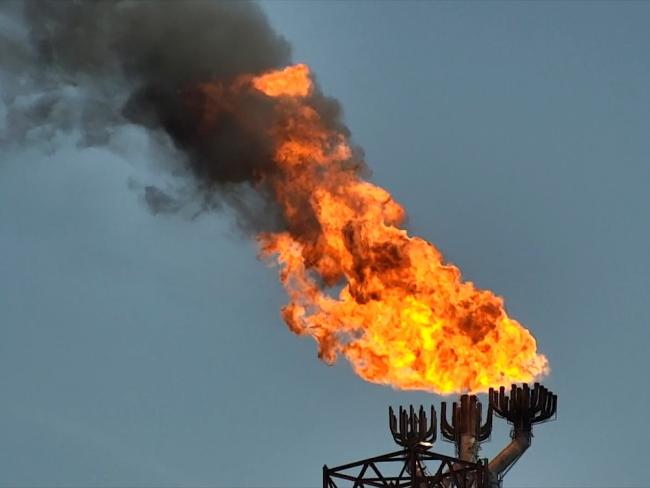
[Top photo: ‘I think this puts the final nail in the coffin of CleanBC,’ says Sven Biggs, campaign director for Stand.earth. Photo via BC Energy Regulator.]