Articles Menu
May 8, 2026
[Editor’s note: This article contains discussion of residential school denialism and abuse at residential schools.]
One morning last November, Shay Paul opened Facebook from her home in Kamloops, B.C., and was shocked to find her online community pages transformed.
Every group she was part of — from a page for Kamloops community updates to one for local thrifters — was awash in what she called residential school denialism.
“It was slandering and dragging my leadership through the mud. It was very vocal threats of violence in my own community,” said Paul.
Paul is an artist and community organizer living in Tk̓emlúps te Secwépemc. She had known there were people in Kamloops who denied the history of her people and especially of their experiences at Kamloops Indian Residential School, but she had never seen it this blatant.
“Everywhere I looked on social media, it was in my face for like a week,” said Paul, who works as the project director for the Indigenous Resurgence Project. “I didn’t feel safe here.”
She was sure she knew what had sparked it. The day before the torrent of denialism suddenly appeared in her feed, a demonstration had taken place on the Kamloops campus of Thompson Rivers University.
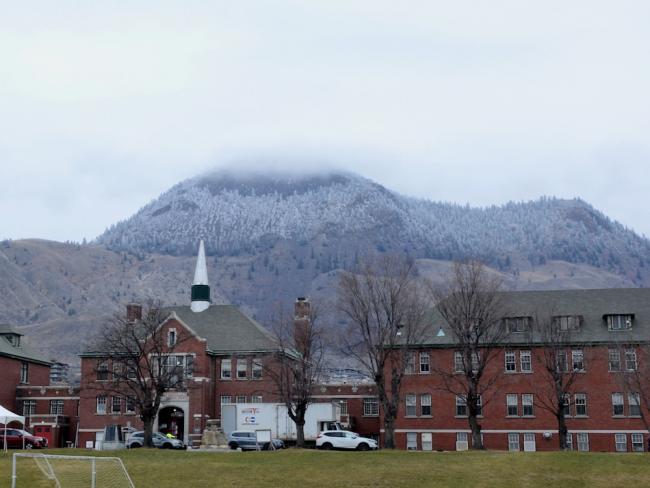
Protesters wore sandwich boards bearing messages such as “What remains?” “215” and “Denial or truth?” The words were an apparent reference to the radar detection of approximately 200 anomalies consistent with children’s graves discovered at the former Kamloops Indian Residential School back in 2021 — a finding the demonstrators called a “mass deception” perpetuated by the Tk̓emlúps te Secwépemc Nation.
They were met with a small crowd of counter-protesters wearing orange shirts and beating drums in resistance to their message, but the impact of the event resounded through the region in the days afterwards.
Residential school denialism, while always present in the community, had emerged from the background and blown up “like a match to tinder,” according to Paul, in the wake of the demonstration. Months later, Paul said, the shift is still noticeable.
“Even now... there’s not a Facebook post that goes out about Indigenous events in Kamloops where there’s not at least one person in a comment section on a shared post saying something about how our experiences as Indigenous people are fabricated,” said Paul.
The Thompson Rivers University event was not an isolated one, nor did it emerge in a vacuum. It was one of a series of events led by Frances Widdowson, a former Mount Royal University professor, on university campuses across Canada.
Widdowson has not been alone in her efforts to generate skepticism about Canada’s residential school history. She is part of a group of roughly two dozen retired academics, lawyers and writers from across the country who collaborate with one another in an email group to construct a more positive version of residential school history.
Collectively, the members of this group are having an outsized impact in sowing doubt about the harms of the residential school system.
They have published over 500 articles about residential schools on various platforms in the last five years and have published three books in the same time span. The books, as well as many of the group’s articles, have been published through the charitable think tanks Frontier Centre for Public Policy and True North Centre for Public Policy.
The two books published by the True North Centre have made bestseller lists in Canada.
In October 2025, two years after it was published, Grave Error: How the Media Misled Us (and the Truth About Residential Schools) was No. 2 on Amazon Canada’s bestseller list for Canadian literature. In December of the same year, the newly published sequel, Dead Wrong: How Canada Got the Residential School Story So Wrong, was No. 1 on that list while Grave Error was No. 2. A couple of months into the new year, those two books held the top two spots of the bestseller list.
A bill that would criminalize condoning, downplaying or justifying the residential school system in Canada is currently being considered in Parliament for the second time and could have implications for the email group and the think tanks they’re associated with.
Leah Gazan, the NDP MP who tabled the bill, said the need to address residential school denialism has become more pressing in recent years.
“Since the discovery of the unmarked graves, it’s increased and it’s become pretty violent,” said Gazan, who represents Winnipeg Centre and is a member of the Wood Mountain Lakota First Nation. “It’s at a level where it’s really unsafe.”
The federal government set a precedent for criminalizing denialism in 2022, when the Criminal Code was amended to include denying or downplaying the Holocaust.
Members of the email group reject being associated with those who question Holocaust history, believing their work to be in line with appropriate historical inquiry. In Grave Error, one contributor says criminalizing residential school denialism would be an “infringement on free speech.”
In a 2024 press conference, Gazan offered a different opinion, arguing, “There is a difference between free speech and inciting hate. Residential school denialism is inciting hate, full stop.”
The email group
In the summer of 2012, a retired English teacher hopped on a plane to travel from the Canadian East Coast to the foothills of Alberta. He was returning to an old home, Kainai Nation, where his father, an Anglican priest, had served as a principal of St. Paul’s Indian Residential School.
As a kid, Mark DeWolf attended classes at the residential school, despite not being Indigenous. He remembers feeling somewhat isolated among his fellow students, who mostly spoke Blackfoot outside of classes.
“I was small. I was shy. I didn’t reach out to people and make friends as easily as I might today, so I was not a great mixer with the Kainai kids,” said DeWolf.
The purpose of DeWolf’s trip to Kainai Nation was not one of mere nostalgia; it was a mission of exoneration. He hoped to find evidence that his father’s legacy as a principal of a residential school was one of warmth and kindness, not of abuse and neglect like the stories that began pouring out from residential school survivors across the country in the years after he left St. Paul’s.
The first such story DeWolf had heard was in 1990 when Phil Fontaine, former National Chief of the Assembly of First Nations, was interviewed by CBC Radio about the physical, psychological and sexual abuse experienced by the students at Fort Alexander Residential School — a history that had affected Fontaine personally. Following this interview, more former residential school students began coming forward with their own accounts of abuse.
A year later, DeWolf published an article in the Globe and Mail with a title DeWolf regrets: “We Gave Them More Than Beatings.” The article recounts his memories of St. Paul’s and his father’s kind-heartedness. He was a kind of socialist, according to DeWolf, who caused a rift with the local bishop because he pushed for social change outside the church.
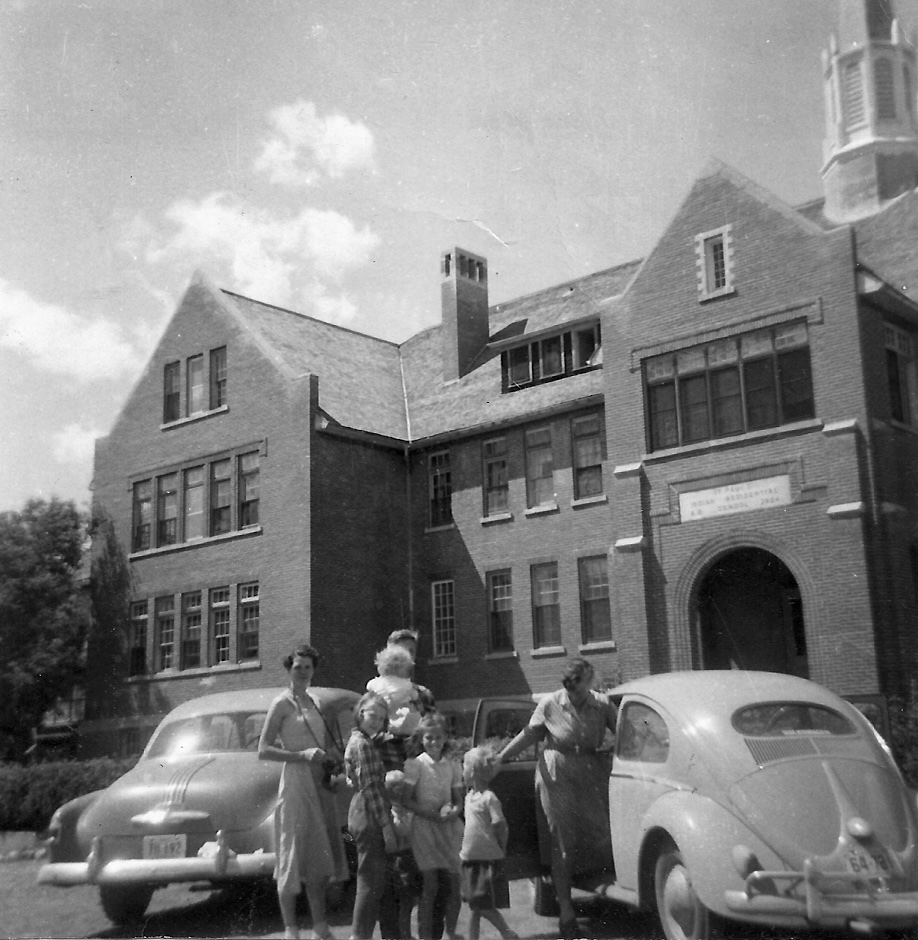
While the article was to act as a counter to some of the stories of abuse from survivors and describe St. Paul’s in a more positive light, records show a range of disturbing incidents taking place at the school.
These include reports of a girls’ residence being intentionally lit on fire by a male staff member in 1895, an “unhealthy relationship” developing between a staff member and a student in the 1940s and ’50s, complaints of staff whipping students in 1903 and underfeeding students between 1949 and 1952, and the employment of a serial sexual abuser who would later be convicted of sexual assault.
During the period when DeWolf’s father was principal, a case of typhoid fever led to a health inspection that determined “the dairy at the school was filthy.” The government report described a dysfunctional septic tank with solids from the tank lying stagnant in a hole in the farmyard, improperly covered. It concluded there was a “strong likelihood” that pathogens causing typhoid fever were being transmitted from the farmyard sewage to the udders of cows, and then to the milk the children were drinking.
The formation of the email group
Mark DeWolf’s more positive article about St. Paul’s caught the attention of Rodney A. Clifton, a professor in Manitoba who had worked at a residential school in Inuvik, Northwest Territories, and had fond memories of his time there.
The two began working together and, after the release of the Truth and Reconciliation Commission report in 2015, they decided to publish a book about the benefits of the residential school system, which they felt hadn’t been emphasized enough in the report. The book was titled From Truth Comes Reconciliation: An Assessment of the Truth and Reconciliation Commission Report.
Their publisher was a charity based in Winnipeg called the Frontier Centre for Public Policy, which had already published previous articles justifying the residential school system and had even put out radio ads about the “myths” of residential school abuses.
The book was a compilation of essays and articles from authors that largely question the validity of the Truth and Reconciliation Commission’s final report. Clifton and DeWolf would send emails to the contributing authors about their work. From there, the email group was born.
Clifton first told me about the group’s existence in an interview. He said it’s now made up of about 20 members who live across the country, with at least one from outside of Canada. Members send the group their work on residential schools for editing and collaboration.
While some members circulate their work on their own websites, many work with think tanks in Canada, such as the Frontier Centre, which publish their narratives about residential schools.
Those narratives generally try to discredit the hefty volume of scholarship, reports and survivor testimonies that show the harms of the residential school system — harms that the Truth and Reconciliation Commission of Canada concluded were a central part of Canada’s policy of cultural genocide.
According to Clifton, most members of the group are retired. This is no coincidence — as he pointed out, it allows them to write what they want without fear of retribution in their work lives.
“Because we’re retired, we can be courageous,” Clifton said.
A similar explanation appears in a second book put together by members of the email group, Grave Error.
In the introduction, one of the book’s editors writes: “It is no accident that many in this group are retired, since this gives them vital protection against attempts to silence them as ‘deniers.’ As Janis Joplin sang, ‘Freedom’s just another word for nothin’ left to lose.’”
Grave Error targets the Kamloops findings, trying to discredit lived experiences of students at the residential school and rationalize the deaths that occurred there.
A closed-loop network
Dark grey skies and fog-tinged mountains greeted me when I stepped off the plane in Kamloops.
After driving to my hotel and discovering I still had a few hours until check-in, I made my way to a café for lunch. Waiting in line, I got to talking to the man behind me. When another table became available, we ended up sharing it.
Over our eggs, he asked me what I was doing in Kamloops. I explained I was there on a reporting trip.
“I hope it’s not about those 215 graves at the school there,” he said.
I explained it was, in fact, somewhat connected, then asked why he hoped I wasn’t writing about it.
“Well, because it’s a hoax,” he said.
The concept of a mass grave hoax in Kamloops gained popularity over the years following the 2021 findings of potential unmarked graves at the former residential school. The word “hoax” is used twice in Grave Error to talk about the Kamloops findings, and it has been repeated by email group members in their own publications.
Sean Carleton, a researcher of residential school denialism, observes that one of the tactics of denialism is “flooding the zone,” a term that has been attributed to former White House chief strategist Steve Bannon. It means overwhelming the public with misinformation, so they become disoriented and start to believe it.
Carleton says that while it’s largely the same group of people actively spreading a message of residential school denialism, the means of the spread are expanding.
“The issue is that because of the media landscape and the political landscape that we have, these ideas are being amplified in larger ways,” said Carleton.
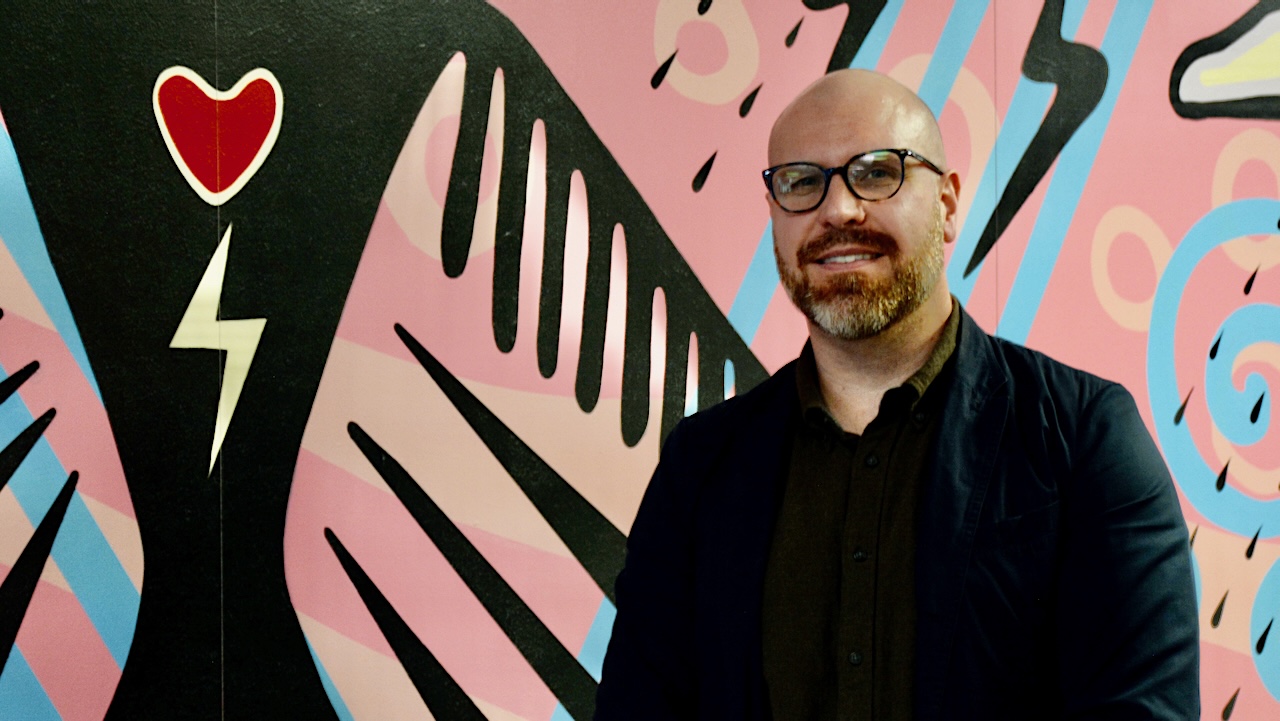
The term “residential school denialism” was coined by Carleton in 2021. It is defined as the rejection or misrepresentation of basic facts about residential schooling, not as the denial of the entire school system’s existence. But email group members reject the idea that their work is either denialism or misinformation. Frances Widdowson says this claim is just trying to keep her quiet.
“I’m not very sympathetic towards these attempts at intimidation, which is what I see them as,” said Widdowson.
The network the email group has formed with each other has been labelled by researchers Tahmineh Farnoud and Justin Harrison as a closed community that cites each other in a loop to suggest legitimacy.
Take, for example, this section of a Frontier Centre article about residential schools by Clifton and fellow group member Hymie Rubenstein:
“As for the genocide accusation, a large and growing body of evidence found here, here, here, and here shows no confirmed evidence of even a single child murdered at any [Indian residential school].”
Each linked site leads to a body of work developed by an email group member, the first by Jacques Rouillard (contributor to Grave Error), the second by an author under the pseudonym KamRes and the last two by someone under another pseudonym, Nina Green.
The arguments of these articles overlook the nuanced definition of the term “genocide,” which does not only include mass killing. While the Truth and Reconciliation Commission concluded the residential school system was part of a policy of cultural genocide, a 2022 House of Commons resolution recognized the residential school system as, simply, genocide.
‘It got to the point where I actually had to have security’
Ceremony was woven into the search and recovery of the missing.
Kimberly Murray remembers repeated mornings of waking up at 4 a.m., driving to the airport and getting on a plane to arrive in communities across the country where searches for missing residential school students were underway.
She would meet with on-the-ground teams conducting searches or with families trying to do their own research on missing or disappeared loved ones. When bodies were found in a municipal or church cemetery, or a landmarked mass grave, the family would be called. At the cemetery, a ceremony would be performed to bring the spirit of the child or family member back home.
After the 2021 discovery of potential children’s graves at Kamloops Indian Residential School, the Canadian government appointed Murray to a two-year position with a long title: independent special interlocutor for missing children and unmarked graves and burial sites associated with Indian residential schools.
Her role was to meet with Indigenous communities across Canada to eventually recommend a new federal legal framework for the respectful and culturally appropriate treatment of unmarked graves and burial sites at former residential schools.
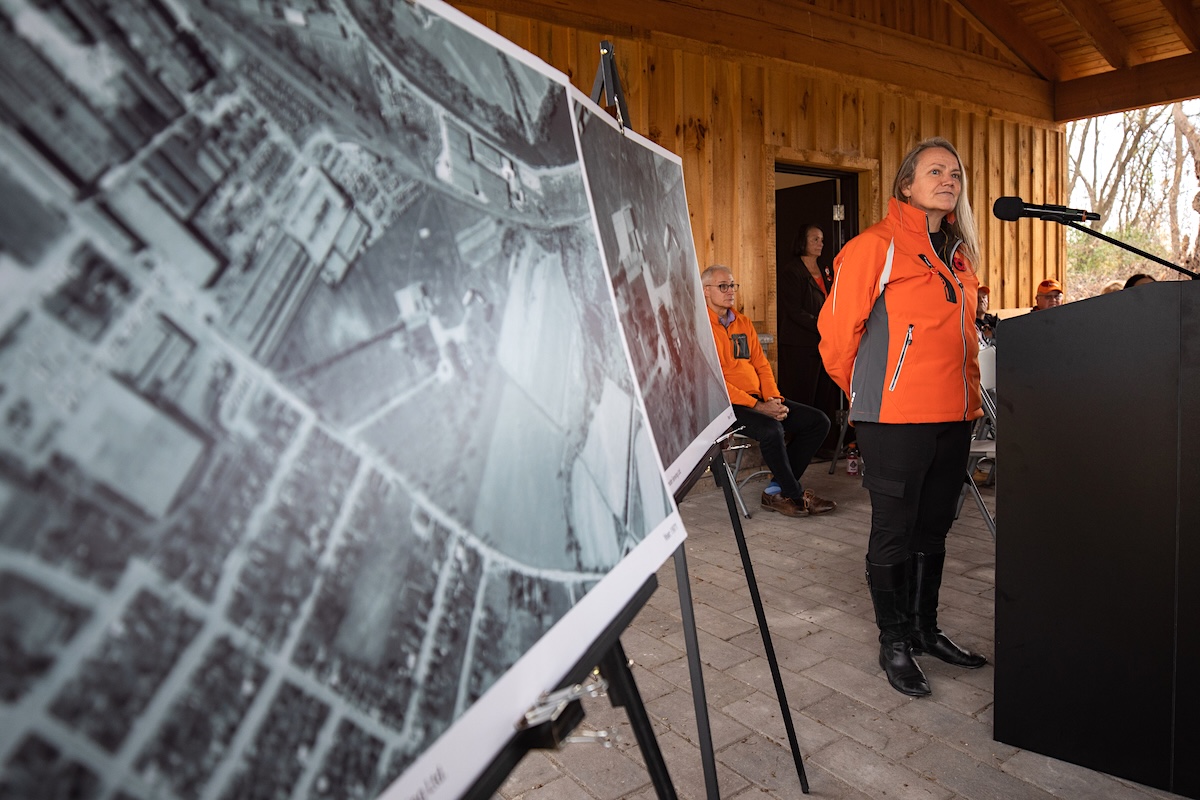
She was a witness to the heavy and complex emotions of the search and recovery process.
Alongside this emotionally weighty work, Murray was also receiving frequent emails from people across Canada with opinions about her job.
Several of these messages came from at least one member of Clifton and DeWolf’s email group. Throughout the two years in her role, Murray ended up getting over 100 emails that she classified as “denialist.”
She was told she was a traitor to the country, that she would get punched in the face and, more ominously, that things “wouldn’t end well for her.”
“It got to the point where I actually had to have security come be with me when I went to public events, and had increased patrolling of my neighbourhood where I live,” said Murray.
Her experiences compelled her to write extensively about residential school denialism in her final report. In the executive summary of the report, Murray writes that the denialism “should not be dismissed as a harmless fringe phenomenon.”
She has also witnessed the effects of residential school denialism on communities searching for their loved ones’ remains.
“I’ve seen them crying,” said Murray. “It’s so upsetting to them that people are spreading these mistruths. It’s just revictimizing the survivors.”
When asked how he would respond to the knowledge that his work has caused pain and retraumatization to Indigenous communities, Rodney Clifton said he would “hopefully [respond] with empathy.” He ultimately feels, though, that former students’ stories of abuse can’t be trusted.
The comments made by denialists are not new to Murray. She was the executive director of the Truth and Reconciliation Commission of Canada, and she remembers the same thing happening while she was doing that work, with some of the same people. But now, she feels as if it’s gotten louder.
Ted Gottfriedson, who previously worked as the language and culture department manager for Tk̓emlúps te Secwépemc, received a similar onslaught of emails when he was part of initiating the ground-penetrating radar search at the former Kamloops Indian Residential School.
He estimates receiving 300 to 400 emails per day back when the news first broke in the spring of 2021. While most of them were supportive of the community’s work, about 10 per cent were accusations or insults — saying the community was just trying to make money or telling them to get jobs.
When asked whether he thought residential school denialism was growing, Gottfriedson replied, “What is growing is the comfort people have with sharing their denialism.”
“We’re seeing a lot of politicians giving permission to people to be racist... to practise those ideologies, to put them out there,” said Gottfriedson. “That window of opportunity is now there.”
The think tanks and the money behind them
A few days after Michelle Stirling presented at an online seminar about her research on Canada’s residential schools, she received a phone call.
It was from a person she had never met who heard about her research from someone else at the seminar. They were interested in her work, and after she shared more about it, Stirling was eventually asked to join an email group dedicated to writing a new narrative about Canada’s residential schools — one that rejected claims that it was a system of abuse and genocide. She said she’d love to.
When I met Stirling via video chat, she was wearing a T-shirt she sells on her website, where she promotes her writing and merchandise. The words on it say, “Every Living Child Matters Most of All!” and shows a young girl with braids wearing a jingle dress and dancing inside a red heart. It’s the “All Lives Matter” equivalent to the “Every Child Matters” movement. The website’s product description says the shirts are meant to “honour the living children who are sometimes forgotten” rather than focusing on the “past that is gone.”
Stirling’s seminar presentation, and much of her other written work on residential schools, was about tuberculosis. Her claim is that the disease caused higher death rates everywhere in Canada in the late 19th and early 20th centuries and hit Indigenous communities especially hard, concluding that death rates at residential schools were on par with rates elsewhere — not caused by abuse or neglect.
In reality, historical and health research shows that tuberculosis thrived in residential schools because of poor ventilation, overcrowding and the malnourishment and stress endured by students. In the 1930s, mortality rates from tuberculosis were 700 per 100,000 people in First Nations communities, but over 8,000 per 100,000 for children living in residential schools. In the general Canadian population, the rates were between 53.5 to 79.2 per 100,000 during the same decade.
When she started writing and presenting her own version of residential school history, Stirling said many people wrote to her to tell her they were hurt by her work.
“Every time I opened my mouth on the topic [of residential schools]... I just knew that people would probably hate me,” said Stirling. “I just felt so alone.”
When she got the call asking her to join the email group, she was glad to finally connect with people who shared her perspective on Canada’s residential school history.
Stirling’s seminar presentation and subsequent recruitment to the email group was not a one-of-a-kind occurrence. Clifton has said that he often found people to invite to the group after meeting them at conferences. In particular, group members were often discovered at conferences led by Civitas Canada.
Civitas describes itself as “a membership-based, non-profit organization” that advocates for free-market ideals and opposes excessive government, according to a video on its website. While it claims to welcome all political leanings, Clifton calls it a conservative organization.
Essentially, Civitas is an event organization made up of members largely consisting of conservative activists and think tanks in Canada. Past presidents include: Tom Flanagan of the Fraser Institute and Frontier Centre; Marco Navarro-Genie, current vice-president of the Frontier Centre; and Candice Malcolm, founder of True North and Juno News, which are both operated by the True North Centre for Public Policy.
Email group members are intertwined with this network of conservative think tanks. Multiple members have associations with more than one conservative think tank organization. In addition to Flanagan’s other think tank connections, his book Grave Error was published by the True North Centre.
Multiple group members associated with the Frontier Centre, including Clifton, also publish their articles on residential schools with C2C Journal, operated by the Manning Foundation for Democratic Education — a charity with the stated goal of supporting conservative think tanks.
The organizations with charity status, including the Frontier Centre, True North Centre and Manning Foundation, receive large portions of their funding through the Gwyn Morgan and Patricia Trottier Foundation. Gwyn Morgan is an ex-oil and gas CEO and fracking pioneer who is also on the board of directors at the Manning Foundation and an author at C2C Journal, where he’s written multiple articles lamenting the barrier Indigenous consultation poses to pipeline construction.
The trickle-down effect
Kyle Willmott, a professor of sociology at Simon Fraser University, has researched the role political advocacy groups such as think tanks have played in fuelling anti-Indigenous sentiment in Canada. He’s observed that they operate in a network, with crossovers of staff and funding sources between them.
“When we look at our data for the think tanks... it’s probably the same 20 people, right? Over and over again,” said Willmott.
As the names of think tanks such as Frontier Centre for Public Policy suggest, these organizations have a focus on analyzing, and potentially influencing, public policy.
Certain think tanks perpetuate perceptions of Indigenous populations as taking and wasting taxpayers’ money, Willmott’s research has found.
“It’s meant to encourage a kind of skeptical consumption of media around Indigenous people,” said Willmott. “And I think that’s a huge impact.”
Residential school denialism is part of this, he said. Alongside Widdowson’s repeated claims about a “mass grave deception” at Kamloops is her vocal concern about what the money given to Tk̓emlúps te Secwépemc Nation by the government has been used for.
Other authors claim or imply that former residential school students have lied about their experiences at school to receive compensation under the Indian Residential Schools Settlement Agreement.
Clifton says writing about these concerns is part of the role of the think tank and he considers it an example of “go[ing] after the truth.”
While some writers denying or downplaying residential school history are published directly by think tanks, others reach wider audiences with columns in newspapers. Clifton acknowledged that the Frontier Centre is closely aligned with some mainstream news outlets.
“Frontier has got a possibility of a column in the [Winnipeg] Sun every week,” said Clifton, explaining that members of the group aren’t always paid for those articles.
The National Post, the Western Standard and the Epoch Times — a far-right international newspaper — are just a few other outlets that Clifton said the members of his email group and Frontier Centre colleagues regularly write for.
Civitas founder William Gairdner also describes the reach of Civitas members, who range from professors to authors to political operatives. “I would say it’s not an exaggeration that our members probably influence three or four million Canadians a year, one way or the other,” said Gairdner in a video on the Civitas website.
Moccasin Square Garden
Inside the old gym, now called Moccasin Square Garden, the air is abuzz with chatter for the monthly Tk̓emlúps te Secwépemc bingo night.
To the right of the entrance are remnants of the dinner from the local Chinese restaurant. About a dozen long tables line the hall in two columns, all nearly filled with people gathered in food and conversation. I choose a seat at the back and am warmly welcomed by my tablemates, whom I have never met before tonight. We chat amicably until we’re brought to attention — first, for a lively rendition of a double “Happy Birthday,” and then for the first round of bingo.
A quiet comes over the hall for the first time, though jokes about “locking in” to win one of the least skills-oriented games in existence are being passed around with hushed laughter.
The event is for band members — I had asked permission to come as an observer only — but less than two rounds in, an organizer discovers I have no bingo sheets and runs to grab me a pad and a blotter so I can join.
There’s a casual familiarity among the crowd. Bingo winners are announced by first name — everyone knows who everyone is.
It is only after leaving the event that I discover Moccasin Square Garden was once the gymnasium for the old Kamloops Indian Residential School.
Ted Gottfriedson remembers the band council meeting he was dragged to as a child in the 1970s where the decision was made to leave the buildings of the Kamloops Indian Residential School standing. The reason, said Gottfriedson, was “so that no one could deny what happened.”
From then on, the buildings were to be used as sites of linguistic and cultural revitalization.
The school grounds are sprawling, and all the buildings still on the grounds have been repurposed for use by the community. The Annex, a former school residence built by students in 1962, now houses the Secwépemc Museum and Heritage Park and the band council offices. Fundraisers and luncheons are hosted at the main building of the former school, now called the Chief Louis Centre.
The work Indigenous communities are putting into cultural resurgence is part of the reason Phyllis Webstad, the founder of the Orange Shirt Society, says that the task of combating residential school denialism should be led by non-Indigenous people.
“There’s language we’ve got to learn; there’s our culture. We’ve got to learn how to be a parent, how to be a grandparent,” said Webstad. “We don’t have time for all these people that want to say it wasn’t as bad as it was.”
Despite these words, Webstad and the Orange Shirt Society have been a driving force of education in this country about the intergenerational impacts of residential schooling. She has worked hard to make sure the stories of survivors of the residential school system are remembered, including her own heartbreaking story of having her favourite orange shirt taken away from her when she entered St. Joseph’s Mission Residential School at the age of six.
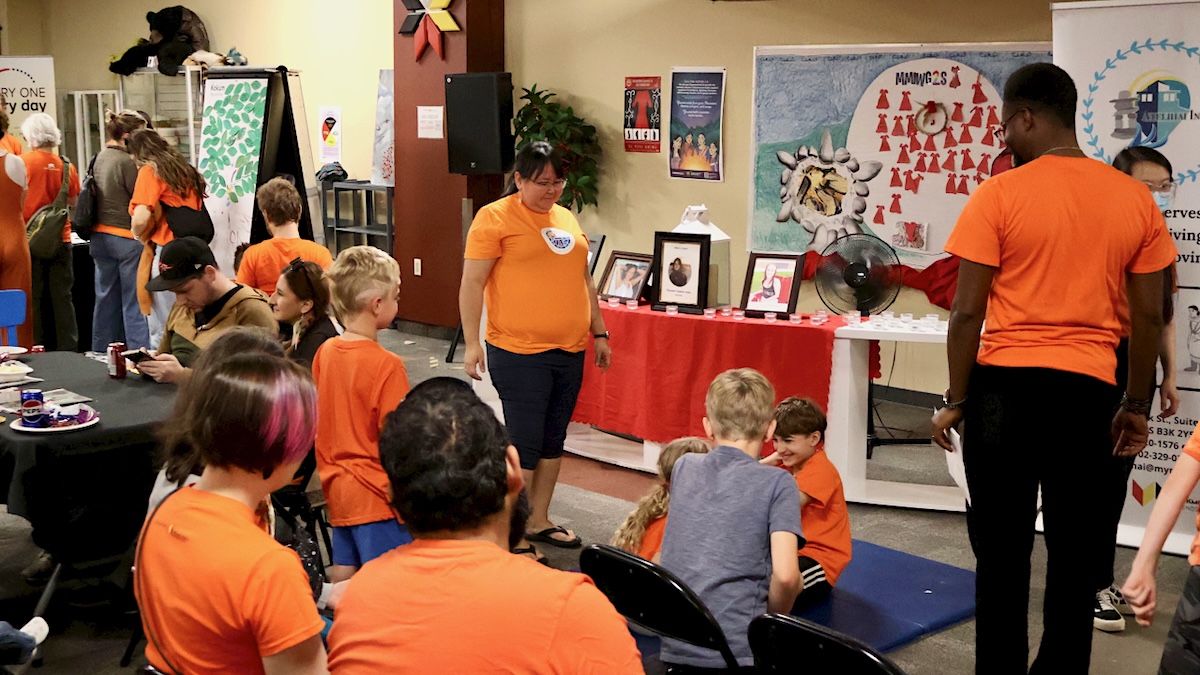
In January of this year, Webstad and other Orange Shirt Society staff decided to plan a visit to Port Alberni, B.C., after an orange bridge honouring residential school survivors was graffitied for the third time with swastikas and racial slurs. The Vancouver Island town is the site of the former Alberni Indian Residential School, an institution with a particularly dark past that includes children being deliberately malnourished as part of government research in the 1940s and ’50s.
The purpose of the trip, scheduled for some time in May, is for education. But, Webstad said, it’s also to say, “We’re here, nobody’s going away, so we need to learn to get along.”
“Before, maybe things weren’t responded to... But now things aren’t being let go.”
The red bridge
Kamloops is divided by two rivers, creating distinct regions that carry their own associations or stigma.
“There is this tangible segregation between Indigenous and non-Indigenous people in Kamloops and, furthermore, between local Indigenous and urban Indigenous people in Kamloops,” said Shay Paul, the Tk̓emlúps artist.
Her art exhibition titled The DIS//CONNECT: Remembering the Red Bridge in Time, put on earlier this year, subtly explores this division. It’s filled with striking images of a historic red bridge that once spanned the South Thompson River to connect Kamloops city centre to the Tk̓emlúps te Secwépemc Nation.
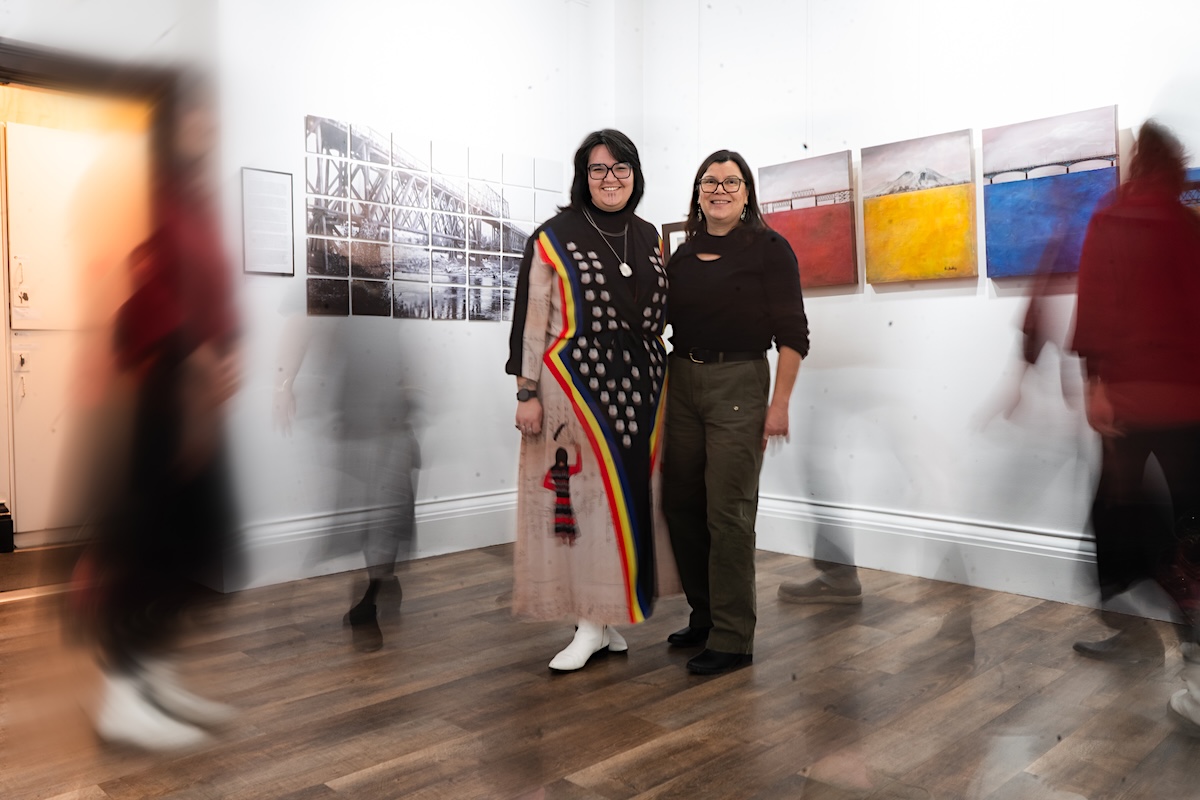
For Paul, the red bridge was a vital pathway to important parts of her life: she lives on the Tk̓emlúps reserve but would cross the bridge multiple times a week to get to her school, doctor and friends.
The bridge burned down in 2024 in a fire police believe was deliberately set. In the wake of the outpouring of hate towards her community after the demonstration of residential school denialism at Thompson Rivers University, Paul saw the symbolism of its loss.
“That bridge is a metaphor for so many things,” said Paul.
“There are so many layers to this disconnection.”
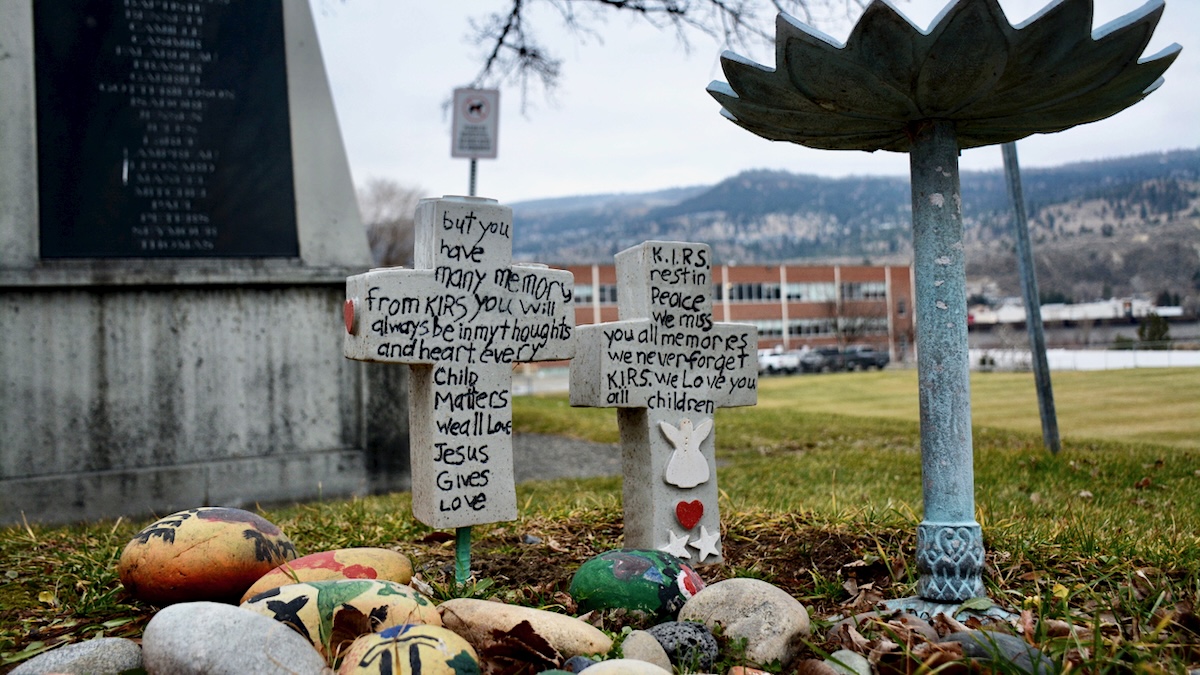
[Top photo: The former Kamloops Indian Residential School became the focus of an outpouring of grief, as well as the target of skepticism, after the Tk̓emlúps te Secwépemc Nation announced ground-penetrating radar had found approximately 200 possible unmarked graves in 2021. Photo for The Tyee by Emily Enns.]