Articles Menu
May 3, 2026
Donald Trump has signed an agreement to get the massive Keystone XL pipeline into production. At the same time, Prime Minister Carney is pushing another pipeline to the Pacific. This, as Canadians are still subsidizing the bitumen in the TMX pipeline to the tune of about 50 cents on the dollar.
Meanwhile, The Guardian published an article this week about the latest findings on the state of the Atlantic Gulf Stream.
And the news isn’t good.
The Atlantic Meridional Overturning Circulation (AMOC) is key to regulating the global climate. It brings warm weather from the global south, creating more temperate zones in Europe. Without it, much of Northern Europe would be in either perpetual deep freeze or drought.
The collapse of the Gulf Stream would plunge the rest of the world into environmental chaos.
In 2021, scientist Niklas Boers published a report showing that this complex climate system (of which the Gulf Stream is just one part) was showing dangerous signs of slowing down.1
Boers warned that the Gulf Stream was at a critical tipping point. The cause was rising ocean temperatures and the instability caused by rising greenhouse gas emissions.
The study drew barely a mention in North American media. I don’t remember seeing any shocked headlines or editorials demanding action. But scientists paid attention. Over the last five years, more studies have been done on the precarious state of the Gulf Stream, and the findings are very frightening indeed.
It is believed that the most pessimistic models for the Gulf Stream are proving to be the most realistic.
What scientists are noticing is a strange “wobble” in the current. Like the kind of wobble that happens before something falls over.
As we face the crisis in the Atlantic stream, scientists are reporting that the ice shelves in Antarctica and Greenland have become increasingly unstable, threatening a massive increase in ocean levels.
And yet in Canada, the crisis in Iran is being seen as a huge opportunity to massively invest in expanding oil and gas production. At the same time, the Carney government has been stripping many of the environmental regulations that were put in place by the Trudeau government.
I think of how far we have strayed from the promise made 11 years ago in Paris. This is when world leaders came together to respond to the UN’s call for urgent action. We were told we had a scant ten years to try and turn things around.
Prime Minister Trudeau stood on the world stage and stated, “Canada’s back.”
Nations made bold commitments to switch to renewables, embrace EV technology, and work toward “net zero” by 2050.
Canada’s targets were doable, but the failure to move in a concerted way made them seem harder and harder to reach. In that time, oil production in Canada jumped from 3.5 million barrels a day under the Harper government to 5 million barrels a day at the time of Prime Minister Carney’s election.
With massive increases to production in the tar sands on the books, the net-zero promises of 2016 have been tossed by the wayside.
We wasted that precious ten-year window.
What’s next? We don’t know.
The ocean current may stabilize. But the odds of it going in the other direction have gone from a marginal possibility to a very real threat.
The one thing we do know is that if we lean into the production of the gases that have created the climate instability, it will get worse. This is not just about our own self-interest but of our obligation to safeguard a liveable future for generations to come.
1 Boers, N. Observation-based early-warning signals for a collapse of the Atlantic Meridional Overturning Circulation. Nature Climate Change. 11, 680–688 (2021). https://doi.org/10.1038/s41558-021-01097-4
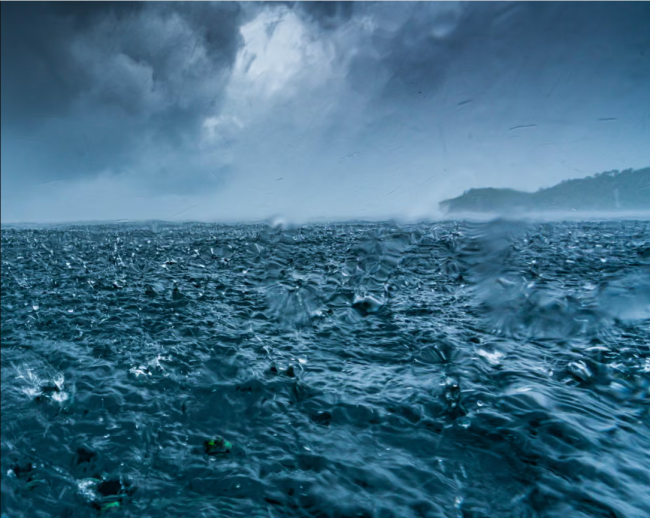
[Top photo: The Atlantic meridional overturning circulation is a major part of global climate system and is known to be at its weakest for 1,600 years as a result of climate crisis. Photograph: Henrik Egede-Lassen/Zoomedia/PA from https://www.theguardian.com/environment/2026/apr/15/critical-atlantic-current-significantly-more-likely-to-collapse-than-thought ]