[Webpage editor's note: This short article by the author of the blog Life on the Leftis part of a discussion in Quebec among socialists and nationalists about the Canadian election. It was submitted to a bulletin associated with the journal Nouveaux Cahiers du Socialisme.]
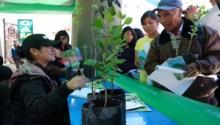
When Bolivian President Evo Morales announced in May that his government was allowing oil and gas drilling in national parks, mainstream and progressive media outlets alike were quick to condemn his supposed hypocrisy on environmental issues.
Writing for the Associated Press, Frank Bajak argued that although Morales is known internationally for his outspoken campaigning on climate change, at home he faces constant criticism from conservationists “who say he puts extraction ahead of clean water and forests”.
Leftist journalist and broadcaster, Paul Mason, has a new book out at the end of this month. It's called ‘Postcapitalism’. I don’t have a copy but Mason has written a long article in the British newspaper, The Guardian, outlining his main arguments, http://gu.com/p/4ay9c
It’s often said that socialists are latecomers to environmentalism, that until the 1990s, Marxists ignored or rejected the concerns raised by environmentalists. There’s some justice to that criticism, but there were important exceptions.
"The call came to protestors assembled at borehole 2 on Burnaby Mountain: 'Kinder Morgan has arrived! Get your asses down here.' I ran to the motorcycle and hurried down to Drummond Walk. A few comrades were just starting to follow KM workers -- 2 hardhats with chain saws, a couple management types and a few security guards. I raged internally as I accompanied them into the forest at the ready, but not knowing what the next step was...
Vancouver Ecosocialists discussion on Vancouver transit plebiscite
Introduction:
Below is the text of an email exchange among some members of the Vancouver Ecosocialist Group between February and April 2015 regarding the Metro Vancouver transit plebiscite.
The recent Vancouver panel discussion on Naomi Klein's new book, This Changes Everything, from which this article took form, was organized weeks before a local Blockadia event took place. By the time the five panelists came together, two had been arrested for defying a court injunction and two were named in a $5.6-million lawsuit for objecting to Kinder Morgan's (KM) planned pipeline through a municipally designated park on Burnaby Mountain.