Articles Menu
Jan. 28, 2026
Over the last decade, Canada has positioned itself as a leader in pursuing reconciliation with its Indigenous Peoples.
Recently, however, federal and provincial governments appear to be engaging in what Christopher Alcantara and Lucas De Sousa call reconciliatory backsliding — a term that describes “moments when governments repeal or alter legislation, policies and processes that are designed to protect the collective rights of Indigenous communities.”
For example, the Alberta government passed legislation in December to prevent the Law Society of Alberta from continuing to require lawyers to take a mandatory training course on Indigenous issues, including “cultural competency, unconscious bias, or diversity, equity and inclusion training.”
Days later, the B.C. Conservative party called for the repeal of DRIPA, the B.C. law meant to bring the province into alignment with the United Nations Declaration on the Rights of Indigenous Peoples.
These events and others like them may signal the beginning of reconciliatory backsliding. If Canadians value reconciliation with Indigenous Peoples, immediate action is needed to reverse this troubling trend.
We see two areas where this should happen.
First, the national myths that drive backlash and backsliding must be confronted. If non-Indigenous Canadians believe a narrative that downplays the wrongs of colonialism or casts reconciliatory actions as unnecessary or unfair, policies that drive reconciliation are vulnerable.
However, convincing Canadians who believe these myths to change their minds is a significant undertaking. Merely presenting evidence against national myths is not likely to convince those who strongly believe them. Instead, we need creative and compelling strategies to push back on harmful myths and promote reconciliation.
One promising strategy is the discussion groups hosted by Circles for Reconciliation in Manitoba, which put Indigenous and non-Indigenous Canadians in conversation.
The organization’s report shows that conversations can change participants’ views and make them more eager to take reconciliatory action. More government investment in programs such as this is a practical step toward reducing counterproductive national myths.
Second, the rhetoric surrounding reconciliatory policy should not be alienating. Just as Martin Luther King Jr.’s calls for justice for Black Americans were tied to values with which his white audience could appreciate, pro-reconciliatory Canadian leaders might consider doing the same, framing reconciliation as a way of making Canada stronger, as long as the intent behind those words is honest and true.
What causes reconciliatory backsliding?
Research suggests that the primary cause is the emergence of settler backlash, which arises when key material and symbolic resources become scarce and contested. In these situations, dominant social groups can develop collective resentment and negative feelings toward other groups that threaten their long-standing control over these resources.
Canadians broadly support some reconciliatory policies, such as the renaming of public infrastructure named after the architects of the residential school system or the signing of modern treaties in remote areas.
However, backlash emerges when reconciliatory policies or their outputs, such as the final report of the Truth and Reconciliation Commission, challenge deeply held national myths and origin stories, or infringe on the property rights of non-Indigenous people.
For instance, the BC NDP government’s 2024 proposal to share decision-making over most public lands with Indigenous nations sparked considerable opposition among some environmental groups and B.C. residents, in part, perhaps, because it challenged the notion of Canadian sovereignty as permanent and uncontestable.
In a similar vein, one recent study found that opposition to new Indigenous-owned housing projects is driven mainly by the perceived negative effect that these projects might have on non-Indigenous neighbourhoods.
When backlash happens, political elites, especially those on the ideological right, can capitalize on it to achieve electoral victories and implement reconciliatory-backsliding policies, reversing gains by Indigenous Peoples.
Reconciliatory backsliding is a global phenomenon
The most visible recent examples are from New Zealand and Australia.
New Zealand has long been a leader empowering Māori communities politically, economically and socially. Yet as the policies and institutions that created this empowerment began to infringe on the material resources of the non-Indigenous majority, backlash began to emerge, allowing two right-wing parties to demand policy changes once they were asked to be part of the coalition government.
Since then, the New Zealand government has rolled back reconciliatory actions, reversing the use of the Māori language in government, limiting Māori claims to the coastline and diminishing Māori partnership in the health-care system.
A similar reversal occurred during Australia’s 2023 referendum on recognizing Indigenous Australians in its constitution and providing them with a representative body in its Parliament.
Although initially popular, support for these ideas plunged over time, leading to a resounding defeat. While there are several reasons for the failure, backlash-stoking misinformation, including that the proposal would demand reparations, played a role.
What does this mean for Canada?
Although reconciliatory backsliding in Canada has not reached the same pitch as in New Zealand and Australia, we are concerned that the hard-won victories of Indigenous Peoples here may be clawed back without intervention.
Parliament’s approval of the Carney government’s legislation to fast-track infrastructure approvals and a pipeline to the B.C. coast has been decried by some Indigenous leaders who worry that their concerns will not be respected. These policies — if pursued without adequate respect for Indigenous self-determination — may mark the beginning of an era of significant reconciliatory backsliding here in Canada.
We urge Canadian citizens and policymakers who believe in reconciliation to pay more attention to these trends. Although we live in a moment of pressing policy concerns around the globe and in our backyard, we must not lose sight of one of the most important demands for justice at home, or we risk losing the progress toward reconciliation that has been made thus far.
Christopher Alcantara is a professor in the department of political science at the University of Western Ontario, where Philip Zuidema is a PhD candidate. This article was originally published by Policy Options.
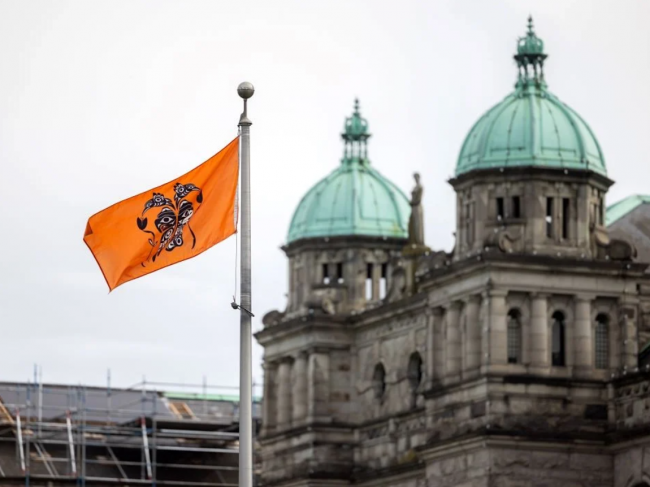
[Top photo: In BC, a political staffer was fired for saying that flying the orange Survivors’ flag at the legislature was a disgrace. Photo via BC government.]