Federal and provincial governments in Canada want to be seen as climate leaders. Yet they continue to introduce policies and spend billions of taxpayer dollars to expand oil and gas production.
TransCanada Corp.’s Coastal GasLink subsidiary will seek a court order this week to dismantle a blockade backed by a group of hereditary Indigenous leaders who are trying to halt construction on a $6.2-billion pipeline project.
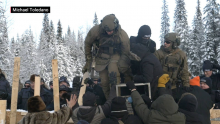
Numerous members of the Unist’ot’en group, also known as the Dark House, have blocked access to a crucial bridge, Coastal GasLink said in its injunction application in B.C. Supreme Court. A court hearing is scheduled for Thursday in Prince George, B.C.
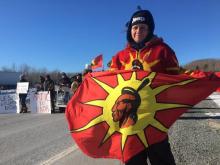
A subsidiary of Calgary-based energy company TransCanada has taken leaders of the Unist'ot'en community to court, accusing the members of the Wet'suwet'en First Nation of blocking access to the area around the Morice River Bridge.
An injunction application and civil litigation filed by TransCanada Coastal GasLink aims to criminalize Unist’ot’en Camp and forcibly facilitate pipeline construction across unceded Unist’ot’en territory.
TransCanada just failed first attempt to cross the Wedzin Kwa Bridge into Unist'ot'en Territory
Since 2010, the Unist’ot’en have maintained a frontline camp to protect their territory from eco-cidal pipelines. First Enbridge Northern Gateway and then Chevron Pacific Trails saw their projects fail. Now, TransCanada has decided to try their luck with Coastal GasLink.
In October, the B.C. government celebrated a decision by private-sector investors to proceed with LNG Canada, a $40 billion infrastructure project in Kitimat to export “natural” gas. Yet somehow much of the media coverage neglects to mention that this gas is extracted by hydraulic fracturing, or fracking, which is now the primary method for natural gas production in Canada. Why are so many media and government announcements studiously avoiding the “F” word?