Top executives were warned of possible catastrophe from greenhouse effect, then led efforts to block solutions.
At a meeting in Exxon Corporation's headquarters, a senior company scientist named James F. Black addressed an audience of powerful oilmen. Speaking without a text as he flipped through detailed slides, Black delivered a sobering message: carbon dioxide from the world's use of fossil fuels would warm the planet and could eventually endanger humanity.
As Alberta’s NDP government grapples with a cratering economy while simultaneously pondering ways to help burnish the province’s tawdry environmental image, debate inside Premier Rachel Notley’s administration has been guided somewhat by an existential question: Why are we here?
Scott Entz climbs a metal catwalk to show off the latest slaughterhouse technology that keeps Cargill Inc.’s kill floor humming while helping to “green” Alberta’s carbon-spewing energy sector.
Some 4,500 head of cattle are dispatched every day at the hangar-sized rendering plant about an hour’s drive south of Calgary. Just about everything that isn’t carved into steaks and roasts, from guts to the coarse hair on the animals’ tails, is incinerated in a state-of-the-art furnace that also serves as an unlikely cog in the province’s multibillion-dollar oil economy.
Grand Chief Stewart Phillip, Freda Huson, Unist’ot’en spokesperson:
FOR IMMEDIATE RELEASE
RCMP provocation of Indigenous land defenders denounced
VANCOUVER (August 27th, 2015) – The Indigenous Unist’ot’en Clan of the Wet’suwet’en Nation in northwestern BC are on high alert about a likely impending large scale RCMP mass arrest operation on their territory. The RCMP have made a number of visits to the Unist’ot’en as well as other First Nations leadership regarding the Unist’ot’en community’s active exercise of their Aboriginal Title and Rights to protect their lands from oil and gas development.
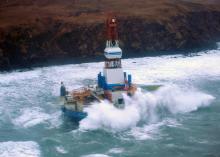
. . . "It sends a terrible signal to the rest of the world for the United States to be using public resources to promote [Arctic] development," said Niel Lawrence of the Natural Resources Defense Council (NRDC). "We have to make clear to the rest of the world that we are all in on a clean energy future. And we've got to stop giving the rest of the world license to go exploring by permitting Shell to do it."
The National Energy Board is postponing the Kinder Morgan hearing until further notice because Steven Kelly, the board’s most recent appointee, is a consultant who worked on the Trans Mountain pipeline file.
The NEB announced the news late on Friday, stating the oral summary arguments, which were set for Aug. 24 in Calgary and Burnaby in September, are now postponed and Kelly’s evidence will be stricken from the hearing records.
CALGARY, Aug. 21, 2015 /CNW/ - The National Energy Board (NEB) hearing panel for the Trans Mountain Pipeline Expansion project (Project) is postponing oral summary arguments, previously scheduled in Calgary on Monday August 24 and in Burnaby from September 9-30.