Articles Menu
British Columbia’s modest climate gains are at risk after a wave of policy clawbacks this past year.
According to the province’s recent accountability report — which reflects BC’s climate data on a two-year lag — carbon pollution declined by four per cent in 2023, meaning emissions are now 9 per cent below the 2007 baseline.
The province has also nearly halved methane emissions in the oil and gas sector from 2014, meeting this year’s target two years early.
However, many climate measures that are just beginning to bear fruit, or will soon — such as the consumer carbon tax, electric vehicle rebates and sales mandates and net-zero requirements for liquified natural gas (LNG) projects — have been pruned back or chopped entirely in 2025. What’s more, the province scrapped the promised oil and gas sector emissions cap and never delivered a clean transportation plan although fossil fuel vehicles continue to account for 41 per cent of the BC’s carbon pollution.
As a result, the accountability report looks back at progress resulting from policies that now no longer exist, said Jens Wieting, senior policy and science advisor at Sierra Club BC. Yet the province doesn’t detail how it plans to drive down carbon pollution and its impacts on people’s health and pocketbooks as climate disasters including record wildfires and floods, which recently devastated farmers in Abbotsford for the second time in five years, continue to occur, he said.
Last year’s accountability report already indicated BC wasn’t on track to meet its 2030 carbon pollution target — a reduction of 40 per cent — yet the province has still slashed climate policies.
“It’s irresponsible to leave people in the dark about what actions will be taken to get us closer to the 2030 targets, because climate change is a life and death issue, and that’s not reflected in this report,” Wieting said.
A BC accountability report shows some limited progress on reducing carbon pollution just as the NDP government weakens or abandons climate measures in 202. - BlueSky
A “shocking” detail in the report was the amount of carbon pollution being generated by the increasingly severe wildfires fuelled by drought, he said.
Wildfire emissions in 2023, the worst season on record, were six times higher than BC’s total carbon pollution for the year. The province tracks wildfire emissions but they aren’t included in provincial carbon pollution totals because BC, like other national and international jurisdictions, consider wildfires to be natural rather than human caused — a policy that is heavily criticized by climate experts.
“[Wildfire] carbon emissions in 2023 added up to over 400 million tonnes, which is almost incomprehensible,” Wieting said, adding the figures underscore the urgency of delivering carbon pollution reductions that limit global warming below catastrophic levels.
The province highlights its work to reduce carbon pollution in the forestry sector with measures such as using waste wood more efficiently, or tree planting, but it fails to mention any steps or climate benefits tied to protecting old-growth forests that trap large amounts of carbon while protecting biodiversity, he added.
“There isn’t any reference to protecting forests as part of climate action and that’s a huge concern,” Wieting said.
“It would be one of the most effective, most immediate benefits for the climate to keep those enormous carbon pools protected in standing old growth forests.”
Aside from limiting efforts to reduce carbon pollution, BC’s climate rollbacks have additional drawbacks, said Tom Green, senior climate policy adviser at the David Suzuki Foundation.
Nixing the consumer carbon tax and the associated rebate means there’s less incentive for households and businesses to make the switch to EVs and heat pumps or invest in cleaner fuels or technology instead of burning dirty fossil fuels, he said.
Weakening BC’s EV standards to match pending national policies also doesn’t make sense given the province’s former rebates and sales mandate drove one of the fastest uptakes of clean cars in the country, Green said, noting nearly 200,000 EVs are in use on BC roads.
“We’re ahead of the curve; we don't want to try and match northern Saskatchewan,” he said.
The modest emissions reductions in the accountability report don’t demonstrate climate policies don’t work, but rather, that they do and the province needs to truly double down, Green said.
“I think the message is when we put in place good climate policy and we don't sabotage it, change it and weaken it due to industry pressure, then we get results,” he said.
The province’s push to develop LNG export projects while backtracking on carbon pollution rules will also wipe out any climate gains, and move the province in the wrong direction from both a climate and economic standpoint, Green said.
“We’re trying to bring down carbon emissions across the economy but we’re growing this massive LNG export industry which is going to blow any ability to meet climate targets out of the water and lock us into long-term fossil fuel infrastructure,” he said.
Previously, proposed LNG projects like the Cedar LNG now under construction, or the massive Ksi Lisims LNG proposal awaiting a final investment decision, were required to have net-zero emissions by 2030 to get provincial approvals.
But in March, Energy and Climate Solutions Minister Adrian Dix rolled back the pollution rules, stating LNG proponents only have to “provide a credible plan” to reach net-zero if they can’t plug into BC’s electrical grid by that date. In a related move to clean up carbon pollution by electrifying LNG production and export projects along with mining sites, the province is fast-tracking the $6-billion North Coast Transmission Line.
But LNG projects will demand a substantial amount of energy and potentially divert resources from the electrification efforts that truly curb global warming, Green said.
“Any progress we’re making is largely because we’re electrifying the economy by adopting heat pumps and EVs or making homes more energy efficient,” he said.
“But, if we don’t have electricity for all that because we’re giving it to LNG, we’re going to face challenges.”
Jeremy Valeriote, BC Green Party MLA for West Vancouver-Sea to Sky said the province needs to show more political courage and vision to address climate change effectively.
The boom in renewable technologies such as solar panels, which are increasingly affordable, as well as the uptake of EVs worldwide, is disrupting the myth that shifting to a clean economy is unaffordable.
“Conservative operators might continue to try and use [that narrative] but it's going to be much more difficult,” Valeriote said.
The province needs to do more to demonstrate the savings and advantages tied to the long-term life cycle costs of EVs or heat pumps over gas-burning cars and furnaces, which appear cheaper due to their initial cost, he added.
In addition to continuing their fight against LNG and the proposed Alberta oil pipeline, the Greens will be pushing the NDP to start accounting for the long-term social and economic costs associated with carbon pollution and new oil and gas projects, including rising insurance, food, healthcare, housing and infrastructure expenses, he said.
“Liabilities associated with some of our fossil fuels are going to come back to bite us,” Valeriote said.
“People talk about fiscal responsibility, and I really think it's important to remember that the best fiscal responsibility is avoiding some of these catastrophes.”
Green agreed. The government's decision to weaken climate policies despite the economic benefits of climate action is disappointing, he said.
“One thing I don’t think the government is taking to heart anymore is that climate action is good for affordability. It's good for jobs, good for quality of life,” he said. “It’s discouraging that despite all these good reasons to continue the course, we have a government that's lost interest.”
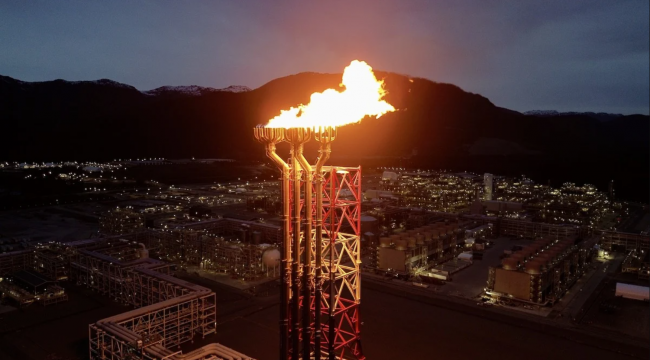
[Top photo: BC latest climate accountability report showed modest reductions of carbon pollution in 2023, the latest year data is available, but doesn't clarify how it will reduce the massive emissions expected as more LNG projects come on line. File photo submitted]