Articles Menu
Dec. 6, 2025
Posted by: Richard van der Jagt
Where Are the Customers? Why the Idea of a Pipeline to Asia Is Built on a Fantasy
Asia is electrifying. It doesn’t need or want Alberta’s ultra heavy sour crude.
MARKHAM HISLOP
DEC 06, 2025
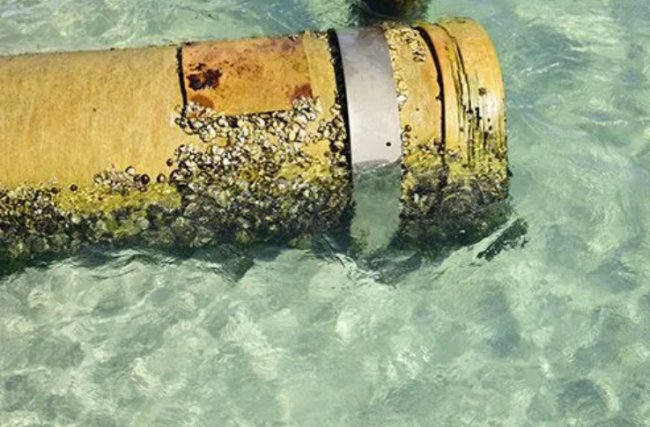
roainamini/Pixabay
This post first appeared on Markham Hislop’s Thoughtful Energy Journalism blog on November 28, 2025. Republished with permission.
The Canada–Alberta memorandum of understanding (MOU) on oil infrastructure is being celebrated in some corners as a breakthrough moment—Ottawa finally embracing pipelines, Alberta finally getting the additional “market access” it has demanded for years, and both governments joining forces to unlock new export opportunities for Alberta’s ultra heavy, sour crude.
But beneath the applause lies a simple, devastating question nobody in power seems able—or willing—to answer: Where are the customers?
That question should be printed at the top of every briefing note in the Prime Minister’s Office, Natural Resources Canada (NRCan), and the Alberta government. It isn’t. And that omission explains everything that is wrong with the MOU.
I’ve been hearing from Ottawa insiders for weeks.
Carney didn’t make this decision based on evidence or market analysis. It wasn’t grounded in demand modelling or energy transition trends. It wasn’t aligned with International Energy Agency (IEA) forecasts or the Canada Energy Regulator’s own transition pathways.
It was driven by something far simpler and far more dangerous: a “drill-baby-drill” mentality masquerading as economic strategy.
Inside Ottawa’s corridors of power, there is a renewed political appetite for the old idea that Canada is an “energy superpower”, and that more pipelines automatically equal more prosperity. In that worldview, asking about the customers is treated as an inconvenience. Or worse, as heresy.
But it’s the only question that matters. If a government cannot identify who will buy its product—at scale, at a competitive price, over decades—then it has no business signing export-promoting agreements, let alone celebrating them. And today, neither the federal government nor Alberta can identify enough—or any at all—Asian customers for ultra-heavy, sour crude.
Because they do not exist.
Ottawa’s Blind Spot: When Politics Replaces Evidence
Let’s begin with the reality inside Ottawa.
The decision to sign the MOU was almost certainly not based on rigorous analysis. Senior public servants, normally cautious and data-anchored, have been echoing talking points rather than economic fundamentals. The modelling that should inform a decision of this magnitude—global refinery trends, crude quality preferences, carbon-intensity penalties, long-term demand scenarios—was not done.
Or worse, it was done and ignored. There is a dangerous new certainty circulating in federal circles: that oil demand will remain strong for decades and that Canada would be foolish not to seize the supposed opportunity.
When pressed for evidence, the answer is vague references to “Asia.”
Exhibit #1: Canada declares “that an Alberta bitumen pipeline to Asian markets as a priority…is a project of national interest and can be referred to the Major Projects Office…”
The quote comes from the MOU. There are other references, all equally vague. This wouldn’t be of note except that this is the typical language used by the Prime Minister on down, Premier Smith on down, and Alberta’s oil and gas sector. Scraps of detail thrown to taxpayers are a few existing sales to China and platitudes about future growth.
A hard truth: Ottawa cannot name a single potential long-term customer for Alberta’s ultra-heavy sour crude and back it up with data. Not one.
The MOU imagines a market that no longer exists — a world where Asian refiners are eagerly lining up to process the world’s highest-carbon heavy crude that costs $15 to $20 per barrel just to get to market.
If that world isn’t long gone, it soon will be.
Remember, the global heavy crude market is only 10 million to 11 million barrels per day (out of 103 million barrels per day of total crude supply). Heavy oil requires special kit (cokers and hydrocrackers) to process it. That requires investment that exceeds a billion dollars, but can often be much higher, depending upon capacity.
Then there are issues like Alberta heavy crude’s high acid content; nearby competitors like Saudi Arabia and Iraq who pay only $2 per barrel to get to Chinese and Indian markets; and the prevalence of long-term supply contracts, which act as a barrier to new entrants.
Let’s not forget that if the oil sands have to build new infrastructure to fill the pipeline, the breakeven costs for “greenfield” projects can be $60 to $80 per barrel. That’s far too high to compete in Asia.
Asian demand for Alberta heavy crude is not a slam dunk. It should not be taken for granted. At the very least, Ottawa should do proper due diligence before subsidizing more production and then share that information with taxpayers.
Those investment tax credits come from our wallets. We have a right to know.
Mark Carney knows all of this. The intelligence is right there in the briefs. Or his experience. But political momentum—and the intoxicating fantasy of Canada becoming an “energy superpower”—have overridden the evidence.
Debunking the Pro-Pipeline Narrative: Petrochemicals and the Global South
To be fair, the pro-pipeline camp does offer two coherent arguments:
Petrochemicals and aviation/marine fuels will offset decline in road transport.
Demographic and economic growth in the Global South will increase oil demand from middle class consumers.
These claims deserve honest engagement, and then honest debunking.
Yes, petrochemical demand continues to rise. Plastics remain deeply embedded in global manufacturing. But pro-pipeline boosters rarely mention two inconvenient facts:
The type of crude matters. Petrochemical growth is driven by lighter, sweeter feedstocks—natural gas liquids—not ultra-heavy sour barrels.
Some Asian petrochemical complexes—particularly in South Korea, China, and Southeast Asia—increasingly favour condensate, ethane, propane, and naphtha, not bitumen-derived blends. Others buy the lowest-cost residues they can find, the junk of the regional refining industry.
The IEA, BP, and Rystad all show the same trend line in their energy modelling: Petrochemicals do not rescue heavy oil. They never have. They never will.
Aviation and Marine: A Small Island, Not a Continent
Aviation demand is rising, but fuel efficiency gains blunt growth. Sustainable aviation fuels (SAF)—mandated in the EU and incentivized in the United States—are beginning to displace kerosene derivatives. Marine fuels face strict sulphur regulations that penalize heavy sour crudes.
The math is unforgiving:
Road transport accounts for roughly 45–50% of global oil demand.
Aviation and marine account for ~8–10% combined and are under aggressive decarbonization pressure.
Replacing collapse in the former with growth in the latter is a fantasy.
The Global South Myth
This is where the narrative becomes almost colonial in its assumptions.
Pro-pipeline advocates imagine billions of future consumers in India, Southeast Asia, and Africa buying combustion vehicles and driving oil demand upward forever. But the evidence points in the opposite direction:
India: Moving aggressively into EV scooters and buses—the fastest-growing segment in global electrification.
China: Already the world’s largest EV market, and pushing hard into heavy-duty electrification.
Southeast Asia: Leapfrogging combustion vehicles directly into electrified two- and three-wheelers.
Africa: Vulnerable to high oil prices; electrified transit is cheaper and increasingly supported by development banks.
IEA’s Stated Policies Scenario already has oil demand peaking this decade. The Announced Pledges Scenario has it in decline. In neither of those scenarios does ultra-heavy sour crude enjoy renewed long-term demand.
The Bitumen Blind Spot: Why Non-Combustion Uses Matter
One of the most damning failures of the MOU is its refusal to even acknowledge non-combustion pathways for bitumen. This is policy malpractice.
Alberta’s bitumen is poorly suited for fuels but exceptionally well-suited for non-combustion products:
Carbon-fibre precursors;
Structural materials;
Asphalt innovations;
Advanced composites;
Solid carbon products;
Industrial feedstocks not tied to combustion.
Alberta Innovates’ Bitumen Beyond Combustion (BBC) work—led by scientists, innovators, and industry—is among the most promising economic pathways Alberta has developed in decades. It is rooted in reality. It aligns with transition economics. It reduces emissions. And it creates value-added industries domestically.
The MOU ignores all of it.
A rational strategy would be to start now building an advanced materials manufacturing sector using bitumen as a feedstock. Carbon fibre for the automotive industry at half the current price. Asphalt binder because the world never stops building roads. Battery materials because Canada is building a battery supply chain to support Western EV ambitions. And many, many other materials that Alberta Innovates has not had the budget to pursue, but which its scientists say are scientifically plausible.
Imagine, a domestic bitumen market impervious to pipeline tolls or price discounts or market pressure from American buyers. A market more isolated from the wild boom-bust cycles of commodities. And more value per barrel of bitumen—up to four times as much.
Ottawa and Edmonton have signed a document designed to push more unrefined bitumen into a shrinking global market, instead of investing in a domestic value chain that could actually succeed.
This is not just a missed opportunity. It is strategic negligence.
The Lemming Problem: Media, Opposition Parties, and Business Leaders Sleepwalk Toward the Cliff
There is another failure here, and it is broader.
Canadian media have largely swallowed the MOU narrative without scrutiny. Headlines trumpet “market access,” “energy security,” and “economic opportunity.” Few ask the only question that matters: Who is buying this oil?
The Alberta NDP, desperate to avoid being painted as “anti-pipeline,” again sided with Smith and the oil industry.
“This MOU is good for Alberta. We need more pipeline capacity, energy exports, and the oil and gas jobs that come with it,” Leader Naheed Nenshi said in an emailed statement. “We have a huge opportunity to unleash new energy investment in this province, and pipelines are a very important component of that. This will take a lot of hard work, and in the end, success for our province will be measured on a pipeline getting built.”
When Carney spoke Thursday to a packed house at the Calgary Chamber of Commerce, he received not one but two standing ovations. Alberta business cheering a Liberal Prime Minister? Has the world spun off its axis?
The Alberta NDP and the Chamber of Commerce have plenty of company. My journalism colleagues in the corporate media asked softball questions, in part because energy isn’t their beat and in part because they are thoroughly captured by the oil industry narrative. The Calgary Herald is known as “Big Oil’s stenographer” for a reason.
This is not just intellectual laziness. It is a failure of civic duty. Those who should be asking hard questions and holding governments to account are content to join the herd, drifting toward the cliff, mistaking movement for direction and consensus for truth.
The Environmental Movement’s Stagnation: Still Fighting 2015’s Battle
[Too many] Canadian environmental organizations have also fallen short. Their reaction to the MOU has been predictable: opposition based on emissions, Paris targets, and the moral urgency of climate action.
In 2025, that argument is structurally outdated.
The world is no longer debating whether an energy transition is happening. It is happening. Every major international model now acknowledges it. Capital markets have shifted. Technology costs have collapsed. Automakers are pivoting. Many utilities are moving decisively toward lowest-cost renewable energy systems.
What matters now is the shape and speed of that transition. Environmental and climate groups have not adjusted their arguments to reflect this new reality:
They talk about emissions, but not electrification.
They talk about Paris, but not transportation emissions standards.
They talk about moral failure, but not market failure.
They talk about stopping pipelines, but not restructuring Alberta’s economy.
Their responses feel frozen in amber—moralistic, reactive, and disconnected from the granular economics of transition. Environmental politics needs evolution, not repetition. The MOU deserved critique rooted in technological change and market analysis.
Instead, it received another round of 2015 talking points.
The Essential Question: Where Are the Customers?
So we return to the beginning.
The MOU imagines a world in which global refiners are hungry for Alberta’s ultra-heavy sour crude. A world in which demand for the dirtiest, most difficult-to-process barrels is somehow expanding. A world in which pipelines are a ticket to prosperity rather than relics of a fading era.
That world does not exist.
There is no refinery expansion dedicated to ultra heavy sour crude. There is no rising long-term demand curve. There is a limit to the Asian surge in complex-refinery appetite. There is no booming Global South combustion future.
There is no customer standing at the end of the pipeline waiting to lock in 20- or 30-year commitments.
There is just a province clinging to old narratives, and a country too timid to ask the obvious.
If Mark Carney and Danielle Smith cannot answer the question “Where are the customers?” then the MOU is already dead on arrival.
Thanks for reading The Energy Mix Weekender!
[Top photo: Asia is electrifying. It doesn't need or want Alberta's ultra heavy sour crude. https://energymixweekender.substack.com/p/where-are-the-customers-why-th...