Articles Menu
Jan 2, 2026
To start with the positives: Expanding programs that enable access to clean home heating and cooling options, like heat pumps, is critical. Heat pumps are significantly more energy efficient than gas furnaces, helping lower energy bills while cutting climate pollution. The recommendation to reduce hydro rates for lower-income households is also welcome.
The reviewers also recommend increasing funding for active transportation and public transit, noting that the current provincial budget falls far short of what is required. Investing in active transportation creates significant public health and affordability benefits.
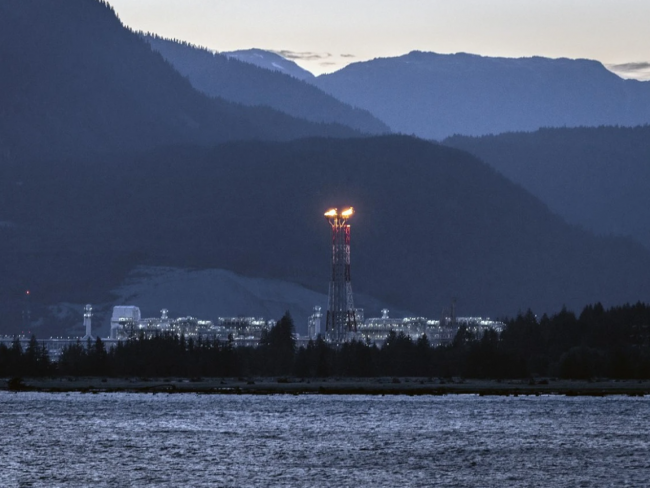
Despite all this, the review falls short of calling for what is needed: an immediate end to LNG expansion.
B.C. was the first jurisdiction in the world that legislated a target to reach 100 per cent EV uptake by 2035. These new “recalibrations” make a mockery of B.C.’s earlier leadership.
The reviewers also advise loosening Zero Carbon Step Code requirements (regulation that limits climate pollution from new buildings). While we agree colder regions of the province should have more time to adopt the highest levels, 90 per cent of B.C.’s population resides in the southern part of the province that should be seeing faster adoption of ambitious policies.
Emission targets are crucial metrics that provide accountability and transparency. They must be aligned with what science and justice demand, not political convenience. Allowing for voluntary uptake of key climate solutions fails to send a signal about the urgency of the climate crisis.
Targets shouldn’t be weakened just because they’re challenging to meet, or not well understood by the public. The consumer carbon tax, scrapped by Premier Eby in April, exemplifies effective climate policy that became politically toxic due to lack of public understanding.
Furthermore, the report refers to biofuels, renewable natural gas (RNG), and hydrogen as “clean-energy supplies,” but most biofuels are no better for the climate than fossil fuels, and hydrogen is an expensive dead end.
The review concludes that “CleanBC is working.” But many of its policies have never been implemented, and LNG expansion continues unchecked. Our political leaders desperately need to have a fire lit under them.
Last month, hundreds of people signed up to speak to Vancouver city council — a city record — in response to an austerity budget that threatened to cut climate and sustainability departments.
The CleanBC reviewers warn that messaging around “constant failure” is deflating. We agree. The solution is not to lower ambition. It is to exemplify how strong climate policies can create jobs, improve our health, lower our bills, and protect the people and places we love.
Eric Doherty is a transportation planning consultant, and B.C. Climate Emergency Campaign transportation working group lead. Dr. Melissa Lem is a family physician and past president of the Canadian Association of Physicians for the Environment. Emiko Newman is coordinator of the B.C. Climate Emergency Campaign. Tracey Saxby is a marine scientist and co-founder of My Sea to Sky.
[Top photo: A flare plume at the LNG Canada plant in Kimiat. Photo: Government of B.C. Photo by Government of B.C. /Government of B.C.]