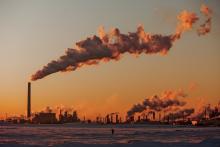
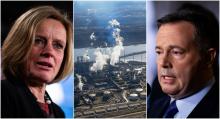
Pollution from fossil fuels in Canada continues to grow by staggering amounts, with the oilsands sector alone responsible for more carbon pollution than all of B.C. or Quebec in 2017, says the federal government in its latest climate change report to the United Nations.
The newest edition of Canada’s National Inventory Report, covering data up to two years ago, shows that the oil and gas sector was responsible for 195 million tonnes, or megatonnes (Mt) of greenhouse gas emissions in 2017, up eight Mt from 2016.
OTTAWA — The return of oil and gas production following the devastating Fort McMurray wildfire and a colder than usual winter pushed Canada’s national greenhouse gas emissions up in 2017 for the first time in several years, a new report says.
The latest national inventory report on emissions, filed this week with the United Nations climate change secretariat, showed 716 million tonnes of greenhouse gases were produced in Canada in 2017, an increase of eight million tonnes from 2016.
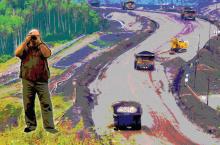
Indigenous people and environmentalists want to prevent the expansion of Canada's oil sands development, and the water and air pollution that come with it.
Large enough to be seen from space, tailings ponds in Alberta’s oil sands region are some of the biggest human-made structures on Earth. They contain a toxic slurry of heavy metals and hydrocarbons from the bitumen separation process.
Huntley told Postmedia News "my interpretation is that a significant amount of oil was sent to China near the end of 2018 when the price was very low, and it stopped the moment the Alberta Premier curtailed production and the price returned to normal."
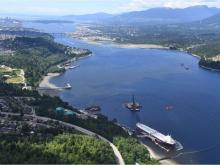
Chinese demand for Canadian crude oil shipped through the Port of Vancouver has dried up in 2019.
It was election night in 2017 and Wilderness Committee staff were gathered at our local watering hole nervously watching the vote totals roll in. We had a lot riding on this election, especially in the fight to stop the Trans Mountain pipeline and tanker project.
I remember celebratory cheers from NDP candidates that they would stop the pipeline as the night turned in their favour and I have no doubt many of these MLAs still hold this as a priority, and even believe their government is honouring its election promise.
Whichever one of you is entrusted with the opportunity to lead Alberta into the future after the provincial election, here is what you need to know to navigate the most challenging issue in your province’s history — the era of stranded assets in the oilsands.
The main argument against expanding fossil fuel use is catastrophic global warming. If you accept that, then economic and employment counterarguments had better be solid.