[Webpage editor note: In addition to the point below that cap and trade has not realy reduced emissions, this policy also functions to distract from other measures that are needed to unambiguously reduce carbon extraction and use. See this popular analysis of cap and trade: http://storyofstuff.org/movies/story-of-cap-and-trade/ ]
Taylor Energy’s Mississippi Canyon 20 platform, before its destruction in 2004. Photo credit: Taylor Energy
Far away from TV cameras and under the radar of the nightly news, oil has been continuously leaking from a damaged production platform located just 12 miles off the coast of Louisiana in the Gulf of Mexico—causing an oily sheens on the surface that stretch for miles and are visible from space.
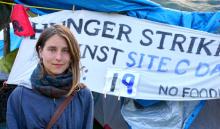
Supporters of Site C/Treaty 8 Stewards of the Land Camp Call Hunger Strike after Camp Dismantled by RCMP
Media release, March 3, 2016:
On Thursday March 3rd, 2016, in the spirit of non-violent action and with the intention of shaming BC Hydro, who are preparing to destroy a vital agricultural and sacred valley in Treaty 8 Territory, supporters of the Site C/Treaty 8 Stewards of the Land will be gathering at B.C. Hydro (333 Dunsmuir St, Vancouver).
On the one hand Premier Christy Clark lauds the efforts of the “stewards of this magnificent land” who came together to protect the Great Bear Rainforest in a historic accord reached in early February between Coastal First Nations, the provincial government, the forest industry and environmental interests.
[Webpage editor's note: The proposed Energy East pipeline would terminate at the Irving refinery and export terminal in St John, New Brunswick. Just one telling tidbit from this article: Property taxes on the Irving's oil-by-rail terminal are half those of the Tim Horton's across the street.]
The Irvings run New Brunswick like a hermit kingdom. But as the Energy East pipeline catapults the family onto the national stage, the timing is awkward. Now even the Irvings aren’t talking to the Irvings,
Canada’s oil sands sector represents a crucial global supply to meet future crude demand, but only if producers can simultaneously drive down costs and slash greenhouse-gas emissions, the head of the influential International Energy Agency said Thursday.
Waste wood could soon replace diesel power at the remote Kwadacha First Nation, which is seeking financial help to build a small biomass plant.
The off-the-grid community of just over 300 wants to build a small biomass facility that would produce around 145 kilowatts of electricity.
"What we're looking at is co-generation, green energy, to burn wood waste to offset the electricity (from diesel) and heat some buildings and a greenhouse we're building," Chief Donny Van Somer said. "We're trying to get off fossil fuels as much as possible."