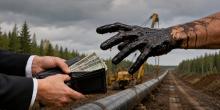
By fast-tracking critical minerals, Canada is not simply building a green economy. It is being further integrated into the U.S. war industry
Even as Prime Minister Mark Carney touts his plans to protect Canada’s economic sovereignty, the country’s critical minerals are making their way into U.S. weapons.
Finance minister says yes, but ATI requests show there’s no plan for how to do both — and reveal significant unpublished emissions estimates
Newfoundland and Labrador is continuing on its path of extractivism without any evidence it will be able to meet its climate targets. But the province’s finance minister isn’t worried and says his government “can do both at the same time” — working toward a just transition while expanding fossil fuel production.
AI Minister Evan Solomon has met with energy and mining companies about the environmental impacts of AI infrastructure, but no environmental organizations, according to documents tabled in the House of Commons.
We are honoured to welcome author and academic Adam Hanieh back to Toronto to deliver this year’s talk. This event marks the fourth edition of the school’s annual lecture, held in the memory of the late Leo Panitch.
In the wake of Venezuelan President Nicolás Maduro’s stunning capture by US forces, Scotiabank CEO Scott Thompson said the “Trump doctrine” — US domination of the Western Hemisphere — will benefit the bank he runs.
British Columbia’s modest climate gains are at risk after a wave of policy clawbacks this past year.
According to the province’s recent accountability report — which reflects BC’s climate data on a two-year lag — carbon pollution declined by four per cent in 2023, meaning emissions are now 9 per cent below the 2007 baseline.