Coal

07/03/14
Author: 
David P. Ball

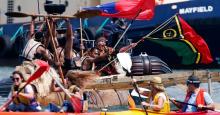
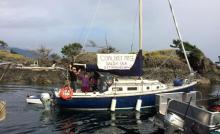
Environmental groups in British Columbia are fully mobilized in the fight against Enbridge Inc.'s Northern Gateway and Kinder Morgan's TransMountain oil sand pipeline proposals. But it might surprise many here to learn that just across the B.C.-Washington border, plans to move an older and even dirtier kind of fossil fuel are the focus of heated environmental concern, economic lobbying, and rising controversy over Canada’s role. That product is coal -- and active plans would see millions of tons of the black stuff shipped through the Salish Sea from U.S. mines to Asian buyers.

10/05/14
Author: 
Democracy Now

One of the country’s most prestigious universities, with one of the world’s largest endowments, has joined the student-led movement to divest from the fossil fuel industry. Stanford University’s Board of Trustees voted Tuesday to stop investing in coal-mining companies because of climate change concerns. The board said it acted in accordance with guidelines that let them consider whether "corporate policies or practices create substantial social injury" when choosing investments. Stanford’s endowment is valued at $18.7 billion.

22/04/14
Author: 
Roger Annis

'Oil, tar sands, coal, natural gas: What's behind the expansion drive of Canada's and North America's fossil fuel industries?' talk by Roger Annis of Vancouver Ecosocialist Group, at University of California Santa Barbara, April 11, 2014

18/04/14
Author: 
Gordon Hoekstra

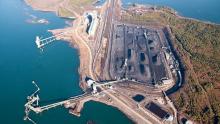
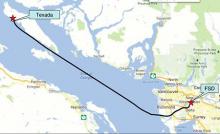
Groups that want a full environmental review of an expansion at a Texada Island coal-handling facility are outraged the B.C. government quietly approved an amended permit without telling local residents or First Nations. The amended permit allows Lafarge to store 800,000 tonnes of coal, double the previous amount. The will enable Lafarge to handle thermal coal from the proposed $15-million Fraser Surrey Docks coal-handling facility. That project, yet to be approved by Port Metro Vancouver, would take four million tonnes of thermal coal annually from the U.S.

Category: 
16/04/14
Author: 
Calvin Sandborn, Kyle McNeill and Rosie Jacobs
Citizens in front of Port Metro Vancouver offices at Canada Place

Some would call it poetic justice. If we increase thermal coal exports to China, we will not only poison the citizens of Beijing and Shanghai, we will likely contaminate our own air.

Prevailing winds across the Pacific connect us directly with China’s unfolding environmental catastrophe. Indeed, disturbing new studies have found that on some days, up to 25 per cent of Vancouver’s air pollution already comes from China, largely from coal-burning plants.

20/03/14
Author: 
Don Hauka
Coal Cars in BC

A new study out of Washington State University suggests the Fraser Surrey Docks coal terminal expansion project would have a major impact on the health of residents living near the facility.

And local academics say the study underlines the fact that approval of the Fraser Surrey Docks project will inevitably lead to increased levels of known carcinogens in the air – particularly in the neighbourhoods adjacent to the terminal.
 

05/02/14
Author: 
Sarah Lazare
Dan River pollution

Up to 82,000 tons of coal ash and 27 million gallons of polluted water have poured into North Carolina's Dan River after a pipe burst beneath a coal ash pond owned by Duke Energy.

"The Dan River is very gray and ashy looking, incredibly dark," Amy Adams of Appalachian Voices told Common Dreams as she stood at the river. "It looks like if you had mixed your run-of-the-mill campfire ash in a five-gallon bucket of water."

Category: 
26/01/14
Author: 
Derek Corrigan
Burnaby Mayor Derek Corrigan

The mayor of the Vancouver region municipality of Burnaby speaks out against the environmental review process of the proposed Fraser Surrey Docks coal export terminal.--website editors

20/01/14
Author: 
Larry Pynn
Coal spill a serious risk to aquatic life in Silver Creek

 The question is: What’s the impact of the coal on aquatic life?

Otto Langer is a retired senior habitat biologist with the federal fisheries department whose experience with coal dates back to 1969 at Roberts Bank near Tsawwassen; he later provided expert testimony in coal discharge cases in the Kootenays and Tumbler Ridge.

He said that metallurgical coal is fractured, with sharp edges — “a bit like glass or crushed hard rock” — and can cause problems if breathed in through fish gills or the lungs of other animals.

Category: 
17/01/14
Author: 
VESG
Santa delivers lumps of coal

ILWU Canada President Mark Gordienko announced December 20  on the waterfront union's website and in the mainstream media the offer of a "$2,000 reward for information leading to the arrest and conviction of masked intruders who violently occupied Port Metro Vancouver’s office on Mon

Pages

Subscribe to RSS - Coal