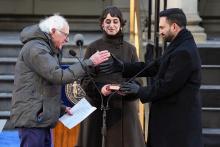
In his inauguration speech yesterday, Mayor Zohran Mamdani assured the people of New York City that the era of small expectations from city government is over. We reprint his address here in full.
My fellow New Yorkers: Today begins a new era. I stand before you, moved by the privilege of taking this sacred oath, humbled by the faith that you have placed in me, and honored to serve as either your 111th or 112th mayor of New York City. But I do not stand alone.
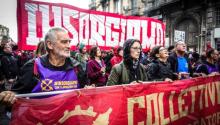
This struggle, developing cooperation into coalition, is an example of the absolutely necessary UNITY that must be built among those fighting for a society that combines democratic working-class power with ecological sanity. ONLY that alliance has a chance of creating a future for our children.
Report exposes vast wealth gap, but fails to challenge the concentrated power of capital
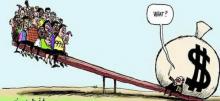
The latest World Inequality Report 2026 reveals the stark cleavage between rich and poor in the world – a division that is getting wider to the extreme. Based on data compiled by 200 researchers organised by the World Inequality Lab, the report finds that fewer than 60,000 people – 0.001% of the world’s population – control three times as much wealth as the entire bottom half of humanity.
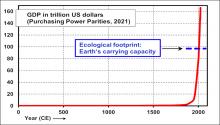
Chart Source: Author’s own illustration, based on long-term OECD analysis.
Sept. 30, 2025
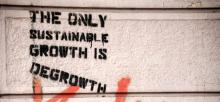
Within a historically short period, capitalist society has generated enormous wealth but also caused profound ecological degradation and threats to survival. Yet the capitalist market economy is incapable of resolving the problems it has created or of securing a liveable environment.
We need a mass movement to ensure a just transition and prevent climate breakdown. But such contestations can go very wrong.
The people in power are not acting on climate breakdown. Which presents us, those not in power, with three options. We change the actions of those in power, we change the people in power or we change the nature of power itself.