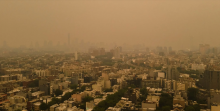
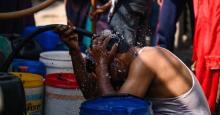
There’s nowhere to escape the smoke from wildfires
My father, who died of lung cancer, used to say that as soon as someone inhaled their first cigarette they immediately knew, if they weren’t in denial, that they were harming themselves.
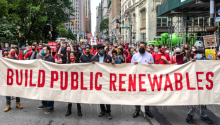
On May 2, New York became the first US state to pass a major Green New Deal policy following four years of organizing by the Public Power NY coalition and allies. The Build Public Renewables Act (BPRA), now New York State law, empowers and directs the state’s public power provider – the New York Power Authority (NYPA) – to plan, build, and operate renewable energy projects across New York State. Organizers are now focusing on growing the movement for Public Power from coast to coast.
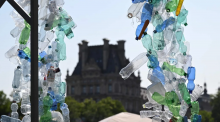
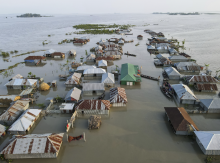
During the second round of negotiations for a global plastics treaty in Paris this week, diplomats have clashed over competing priorities — including the role of recycling and how to address toxic chemicals. But some experts are arguing that one issue in particular should anchor the ongoing talks: climate change.
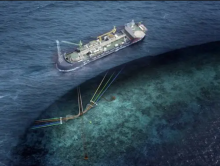
There’s growing speculation that the decision to “postpone” work on the giant Bay du Nord oil and gas project off the Newfoundland and Labrador coast is actually a cancellation moving in slow motion.
Norwegian state fossil Equinor announced Wednesday that it was suspending plans to develop the C$16-billion Bay du Nord megaproject in the province’s offshore for up to three years.
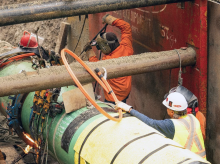
The Trans Mountain pipeline received additional support from the Canadian government after the cost to expand the controversial Alberta-to-British Columbia oil conduit jumped 44 per cent in March.
Tech CEOs want us to believe that generative AI will benefit humanity. They are kidding themselves
Inside the many debates swirling around the rapid rollout of so-called artificial intelligence, there is a relatively obscure skirmish focused on the choice of the word “hallucinate”.