The far right plan to remake America. They even wrote it down.
It’s not like we haven’t been warned.
Should the Republican presidential nominee (likely Donald Trump) win the election next year, conservatives have been pretty clear about what they intend to do. In fact, explicitly clear.
Yet another fairly basic requirement for democratic decision-making which is being steadfastly ignored by "our government."
-- Gene McGuckin
Nov. 27, 2023
Environmental groups call on the BC government to deliver on its long-delayed promise to establish a public participation funding program for environmental assessments
OTTAWA — Life expectancy for Canadians decreased for the third straight year in 2022, and more people died of COVID-19 than in any other year since the pandemic began, according to a report released Monday.
Statistics Canada’s analysis of deaths last year shows the average Canadian's life expectancy dropped to 81.3 years in 2022, a full year lower than the 82.3 years recorded in 2019.
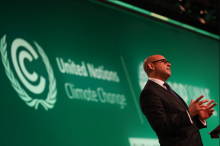
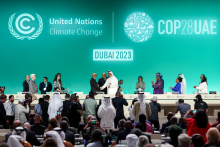
Countries around the world, including Canada, are officially under pressure to further ratchet up their commitments under the Paris Agreement, the UN’s climate change executive secretary Simon Stiell told delegates at the annual climate negotiations in Dubai.
The latest grim findings from climate scientists estimate that based on current trajectories, the planet has roughly six years before blowing past the Paris Agreement’s goal to hold global warming to 1.5 C, Stiell said during the COP28 opening ceremony.
But . . . . "the devil is in the details" and . . . ."In total, over US$400 million was announced. So far, that’s about 0.1 per cent of what’s needed each year, developing countries say, pointing to needs of at least US$400 billion."
Nov. 30, 2023
In what is widely seen as an extraordinary win on the first day of the annual UN climate change negotiations, countries have begun breathing life into a climate finance fund agreed to last year — although the devil is in the details.
U.S. oil and gas companies extracted record amounts of planet-warming oil and gas in 2023 — a year that was the globe’s hottest in recorded history.
New reporting from The Guardian on Monday found that the U.S. government is planning for oil and gas production levels to stay at “near-record levels” until mid-century.