After pressing the province for five years, we’re still coming up short.
As we bid goodbye to summer and welcome fall, many of us breathe a sigh of relief that another “wildfire season” is winding down. Our skies are clear of smoke again. The days may be shortening, but our hearts feel lighter.
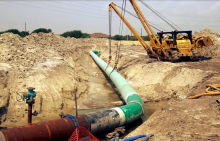
Expansion of LNG Canada project would double exports from Kitimat, B.C., to overseas markets
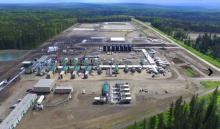
LNG Canada says its multibillion-dollar Phase 2 expansion in Kitimat, B.C., is going forward, in a move that could double exports of liquefied natural gas from the northern coastal facility to overseas markets.
In a statement Tuesday, LNG Canada CEO Chris Cooper said the project will create thousands of jobs and further strengthen Canada's role as a trusted energy partner.
Data centres and democratic decline could lead to more water conflict in the future
Transboundary waters — rivers, lakes and aquifers residing in more than one country — are facing challenges due to climate change, with conflicts over these waters increasing.
Four human errors led to $1.5B gas revenue overestimation, B.C. officials say
(Four spreadsheet and conversion errors in B.C.’s latest budget led to a $1.5-B overestimation of gas revenues, officials say)
The B.C. government made four human-caused administrative errors leading to a roughly $1.5-billion overestimation of natural gas revenues in its latest budget.
That’s according to senior officials in the ministries of finance and energy who on Tuesday provided reporters with a summary of the errors identified during a closed briefing.
West Coast Pipeline Won’t Recoup Its $43.7B Cost as Global Oil Demand Weakens
There’s no likely need for Alberta’s proposed West Coast Pipeline, as the rise of electric vehicles and a faster global energy transition drive down future oil demand and prices at a faster rate than industry and governments may have expected, the Institute for Energy Economics and Financial Analysis (IEEFA) concludes in an analysis released this morning.
Wildfire impacts are one example of the public costs of climate change, yet there is no provincial acknowledgment that these costs are exacerbated by domestic fossil fuel production — or that they put a significant dent into royalty revenues
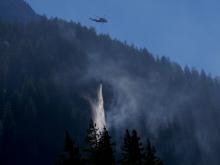
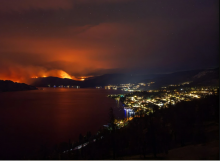
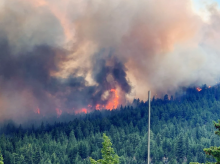
Regional wildfires have triggered a state of emergency in B.C. for the fifth time in 10 years. The premier likened the Summerland wildfire to “a bomb going off in the region.” At the same time, the province is doubling down on the root cause: fossil fuels.
“To be honest, there aren’t really good data on the cost of climate change,” co-author Andy Hira said, something he attributed to “willful ignorance” among policy-makers reluctant to link fossil fuel production to the costs it helps create.
The policy shift, revealed in a government email obtained by The Tyee, takes First Nations by surprise.
British Columbia’s government is contemplating carving the province into three zones to “provide greater clarity” to the timber industry, and discussions have so far left out First Nations.
The zoning plan is outlined in an email sent in early July to public servants in the Ministry of Forests and the Ministry of Water, Land and Resource Stewardship, a copy of which was provided to The Tyee by a source who requested anonymity.