Academy award-winning filmmaker Michael Moore and associates discuss their new documentary, 'Planet of the Humans,' a documentary that says we are selling out the green movement to wealthy interests and corporate America.
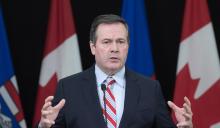
Alberta Premier Jason Kenney lashed out Friday at a reporter who asked him whether a transition toward renewable energy might be on the table as global crude prices plummet.
"With the oil and gas market taking such a hit, when do you start thinking about a transition away from fossil fuels?" Tom Ross, the reporter for Calgary's 660 News, asked.
"Our focus is on getting people back to work, not pie-in-the-sky ideological schemes," Kenney said, flanked by his energy and environment ministers.
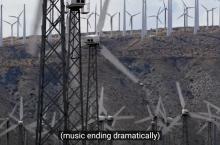
The film ‘Planet of the Humans’ opens with the director, Jeff Gibbs, operating a fossil-fuelled combustion engine vehicle, on a road full of combustion engine vehicles, followed up with some footage taken from the International Space Station (fossil fuelled rockets put that in space).
During a Green Party webinar last week to celebrate the 50th anniversary of Earth Day, one message from a member of the audience caught my attention:
“Michael Moore presents Planet of the Humans, a documentary that dares to say what no one else will this Earth Day — that we are losing the battle to stop climate change on planet earth because we are following leaders who have taken us down the wrong road — selling out the green movement to wealthy interests and corporate America.”
It’s a question that’s been debated since the start of the COVID-19 pandemic, especially when Prime Minister Justin Trudeau eyed broader emergency powers for the federal government and left the door open to using cellphone data to track compliance with physical-distancing rules.