Canadian climate movement tells Carney what we’re for & what we’re against; and news on another emergency – the poison drug crisis
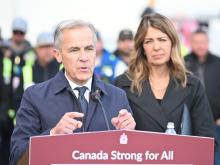
Prime Minister Carney has said, “Don’t tell me what you are against; tell me what you are for.” Well, with respect to the first part – tough! Telling the truth about the climate emergency requires saying “No” to new fossil fuel infrastructure. But with respect to the second request – done!
Website editor: Here is a comprehensive, thorough short interview with Stephen Quinn of the Early Edition.
Oct. 5, 2026
We speak with Thomas Green, senior manager of climate solutions with the David Suzuki Foundation about the recent provincial and federal energy announcements.
Announcing funding to prepare BC for oil spills is ‘a warning sign all on its own,’ UBCIC women’s rep says.
Ending months of speculation, today the Carney government designated the West Coast oil pipeline a project of national interest, sidestepping environmental safeguards that have been in place for decades and charting a course that could irrevocably alter the Salish Sea.
Despite Eby’s ‘buy Canadian’ focus, a firm with MAGA connections is the likely contract winner.
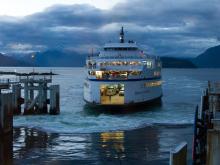
At a time when British Columbia Premier David Eby is championing buying Canadian, BC Ferries may be preparing to enter a multi-year agreement to buy fuel from an American-owned company with strong ties to U.S. President Donald Trump and the governing Republicans.
After pressing the province for five years, we’re still coming up short.
As we bid goodbye to summer and welcome fall, many of us breathe a sigh of relief that another “wildfire season” is winding down. Our skies are clear of smoke again. The days may be shortening, but our hearts feel lighter.
Expansion of LNG Canada project would double exports from Kitimat, B.C., to overseas markets
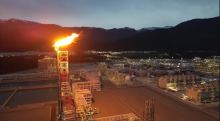
LNG Canada says its multibillion-dollar Phase 2 expansion in Kitimat, B.C., is going forward, in a move that could double exports of liquefied natural gas from the northern coastal facility to overseas markets.
In a statement Tuesday, LNG Canada CEO Chris Cooper said the project will create thousands of jobs and further strengthen Canada's role as a trusted energy partner.
Expansion of LNG Canada project would double exports from Kitimat, B.C., to overseas markets
LNG Canada says its multibillion-dollar Phase 2 expansion in Kitimat, B.C., is going forward, in a move that could double exports of liquefied natural gas from the northern coastal facility to overseas markets.
In a statement Tuesday, LNG Canada CEO Chris Cooper said the project will create thousands of jobs and further strengthen Canada's role as a trusted energy partner.
Last week’s Canada’s Changing Climate Report is a call for faster action to reduce greenhouse gas emissions and shift the economy to clean electricity, analysts say, after the government reported that average warming will reach 3.5° to 5°C by 2100 across Canada and more than 10°C in the Arctic.
West Coast Pipeline Won’t Recoup Its $43.7B Cost as Global Oil Demand Weakens
There’s no likely need for Alberta’s proposed West Coast Pipeline, as the rise of electric vehicles and a faster global energy transition drive down future oil demand and prices at a faster rate than industry and governments may have expected, the Institute for Energy Economics and Financial Analysis (IEEFA) concludes in an analysis released this morning.
It has been heartening to witness the degree of national unity as Canadians steel themselves for the current trade war and insist that our governments stand up to Trump. According to many reports, Canada was dangerously close to signing a terrible deal with yet more concessions. But thankfully, at the 11th hour, the US demanded too much and Prime Minister Carney pulled the plug. The federal government has now announced counter-tariffs that will kick in after Labour Day, along with initial supports for affected workers and businesses.