Website editor: Here is a comprehensive, thorough short interview with Stephen Quinn of the Early Edition.
Oct. 5, 2026
We speak with Thomas Green, senior manager of climate solutions with the David Suzuki Foundation about the recent provincial and federal energy announcements.
Wildfire impacts are one example of the public costs of climate change, yet there is no provincial acknowledgment that these costs are exacerbated by domestic fossil fuel production — or that they put a significant dent into royalty revenues
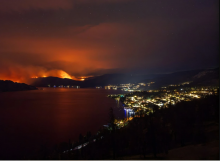
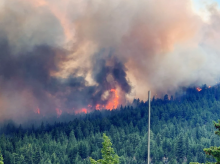
Regional wildfires have triggered a state of emergency in B.C. for the fifth time in 10 years. The premier likened the Summerland wildfire to “a bomb going off in the region.” At the same time, the province is doubling down on the root cause: fossil fuels.
“To be honest, there aren’t really good data on the cost of climate change,” co-author Andy Hira said, something he attributed to “willful ignorance” among policy-makers reluctant to link fossil fuel production to the costs it helps create.
The policy shift, revealed in a government email obtained by The Tyee, takes First Nations by surprise.
British Columbia’s government is contemplating carving the province into three zones to “provide greater clarity” to the timber industry, and discussions have so far left out First Nations.
The zoning plan is outlined in an email sent in early July to public servants in the Ministry of Forests and the Ministry of Water, Land and Resource Stewardship, a copy of which was provided to The Tyee by a source who requested anonymity.
“Not now, El Niño,” pleads the astrophysicist-turned climate scientist, Kate Marvel. On top of the fossil fuel crisis and conflicts derailing the world, it appears that Mother Nature is about to provide the umpteenth lesson that we mess with the grand cycles of the Earth to our peril.
German scientists are warning that global warming is accelerating, that the planet could heat by as much as 3 C over pre-industrial levels by 2050 — just 24 years from now — and that we could exceed 5 C of warming by the century’s end.
This should be top headline news. It should alarm us all. It should spur politicians to urgent action.
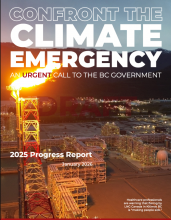
British Columbia’s modest climate gains are at risk after a wave of policy clawbacks this past year.
According to the province’s recent accountability report — which reflects BC’s climate data on a two-year lag — carbon pollution declined by four per cent in 2023, meaning emissions are now 9 per cent below the 2007 baseline.